
Distribution System Planning, Analysis, and Grid Integration
NLR's distribution system research aims to ensure reliable, affordable, and resilient power delivery throughout the energy transition.

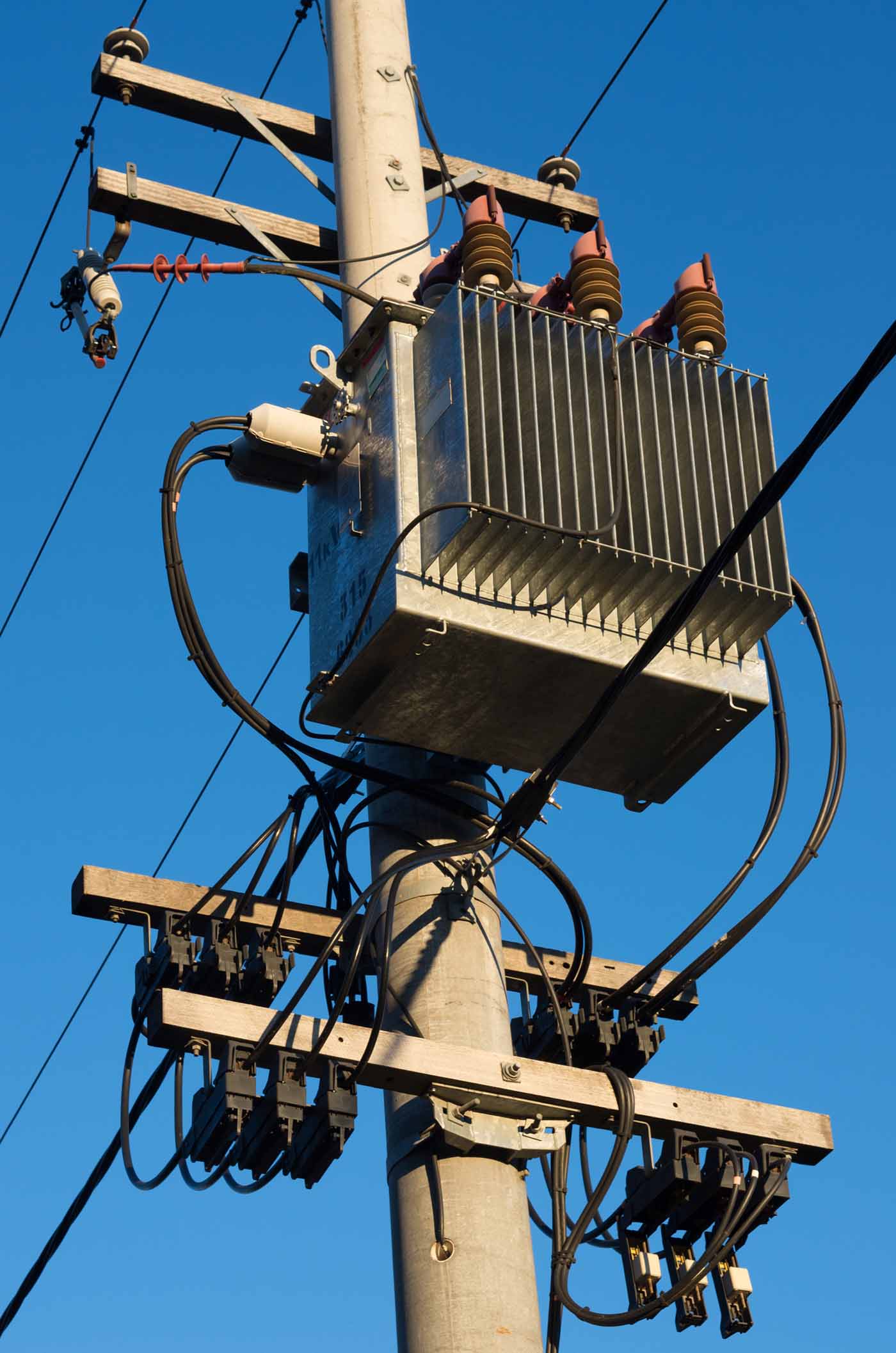
Electric power distribution covers the last mile of the grid, taking electricity from high-voltage transmission to the customer. The distribution system is undergoing unprecedented change, including the proliferation of distributed energy resources (DERs)—predominately solar photovoltaics (PV) and battery storage—and widescale load growth from the electrification of building and transportation.
As distribution networks expand, it is critical to ensure they are resilient to increasing threats from extreme weather. NLR is active in grid modernization research to harness emerging technologies to achieve advanced communications and control—and also highlighting the need to replace aging infrastructure.
NLR has been studying DER integration for more than a decade, from partnering with utilities to develop best practices for solar integration, to developing technical screening methods to "fast track" DER interconnection, to evaluating the value of energy storage systems in the distribution system.
Today, NLR's distribution system analysis is multi-objective and covers multiple spatial and temporal scales. Spatially, capabilities cover the range from indepth analysis of individual distribution assets and feeders, to entire service areas, and to the entire country. Temporally, NLR analysis covers dynamic electromagnetic-transient studies, time-series power-flow, and annual simulation runs for long-range planning and forecasting.
NLR's Distribution Planning Suite
NLR's distribution planning suite includes datasets and software tools that cover data analytics, scenario development, simulation engines, and applications.
Datasets
Synthetic Distribution System Models (SMART-DS)
Distribution Unit Cost Database
Disaggregated Load profiles from ResStock, ComStock, and EVI-Pro
Data Analytics and Generation
Grid Data Model — distribution model representation
Synthetic Distribution Model Creation (SHIFT)
Conversion of Distribution Modeling Formats (DiTTo)
AMI Data Processing and Analytics
Net Load Profile Evolution with DERs and Electrification (EVOLVE)
Application
Distribution Capacity Expansion Planning (CADET)
DER and EV hosting capacity - Distribution Integration Solution Cost Options (DISCO)
Risk Metrics for Power Flow - EMERGE
DER Interconnection - PRECISE
Distribution System Protection Analysis and Relay Coordination (D-SPARC)
Distribution Analysis for Capacity Expansion and Integrated Distribution Planning
Large-scale long-term distribution system analysis is becoming critical as power grids need to modernize and accommodate DERs and electrification growth.
In the flagship Los Angeles 100% Renewable Energy Study (LA100), NLR performed next-generation parcel-level distribution system analysis for the city of Los Angeles to help the city understand broad changes needed to its grid. In the follow-on study, NLR analyzed impacts of energy planning scenarios in Los Angeles.
Similarly, NLR has conducted long-term large-scale transmission and distribution planning analysis for Puerto Rico and has ongoing work with Lithuania in the Lithuania 100% Renewable Energy Study.
NLR has also worked with the U.S. Department of Energy's Office of Electricity to understand the long-term drivers and demand from distribution transformers, helping the industry forecast annual demand to alleviate supply chain constraints.
As power grids evolve and more objectives are incorporated into system planning, NLR is increasingly focused on integrated distribution planning. As part of this work, NLR is building out the Capacity Expansion Decision Support for Distribution Networks (CADET) model to deliver forward-looking, multi-objective investment strategies for utilities and policy makers.
Interconnection and Hosting Capacity
In partnership with Sacramento Municipal Utility District, NLR developed an R&D 100 award-winning solution to automate and streamline DER interconnection called PREconfiguring and Controlling Inverter SEt-points, or PRECISE. PRECISE automates detailed time-series DER interconnection studies. The tool was deployed at the utility in spring 2022.
NLR has also explored machine-learning processes to automate screening residential PV interconnection applications.
Another major focus on NLR's interconnection research is expanding capabilities to conduct distribution system hosting capacity analysis. NLR's DISCO tool is used for both solar hosting capacity and EV hosting capacity analysis and was used in the LA100 Study for service area upgrade analysis.
NLR also has a long history of foundational research in DER interconnection standards, namely IEEE 1547-2018. As part of this work, the laboratory has long-standing collaboration with partners in Hawaii examining advanced inverter functions and potential curtailment and field analysis of advanced inverter voltage control for both volt–ampere reactive and volt-watt control.
Distribution System Modernization and Resilience
Advanced metering infrastructure has enabled visibility at the grid-edge, and NLR is advancing advanced metering infrastructure analytics for distribution planning. Using advanced metering infrastructure data, NLR has performed clustering analysis to examine impacts on tariff structures and load profile development, estimated activation of smart-inverter functions, and conducted time-series interconnection studies and phase identification.
NLR is also developing capabilities in distribution system protection analysis and examining the impacts of DER on protection equipment. NLR conducts both quasi-static time-series and electromagnetic transient analysis to understand the impacts of grid-edge fault-current on protection sensing and clearing.
Additionally, NLR has been expanding analysis into distribution system reliability and resilience given increasing frequency of extreme weather events. NLR's distribution system modeling and analysis allows the North American Energy Resilience Model to examine the impacts of widespread DER adoption on system resilience. NLR is also working with the U.S. Department of Energy's Grid Deployment Office on best practices and utility case studies for resilience planning for wildfires, winter, and nonwinter storms. As part of a growing portfolio of resilience analysis, NLR developed modeling capabilities for threat analysis through the ERAD model.
A large focus of NLR's distribution system analysis is examining use cases of Advanced Distribution Management System and Distributed Energy Resource Management Systems. Using the Hierarchical Engine for Large-Scale Co-Simulation (HELICS) model, NLR co-simulates quasi-static power-flow, real-time digital simulations, and electromagnetic transient models for multiple DER use-cases. This approach enables analysis at scale, including transmission and distribution co-simulation, and has been demonstrated in use-cases including analyzing cyber-physical threats of electric vehicles providing frequency responses services.
Demand-Side Flexibility and Grid-Edge Storage
With evolving communications and control, there are increasing opportunities to procure flexibility from the demand-side (customers). Grid and buildings researchers at NLR developed the Object-Oriented Controllable High-Resolution Residential Energy (OCHRE) Model to enable analysis of buildings to provide flexibility and grid-services. OCHRE supports analysis of electric vehicle smart-charging, frequency response of flexible loads, and model-predictive control for behind-the-meter storage. NLR is exploring how to leverage demand-side flexibility in system planning, with analysis of how aggregators can provide system services and potential impacts to system resilience.
International Work
NLR has conducted distribution system analysis internationally. In India, NLR provided a locally appropriate adoption of IEEE 1547-2018, solar integration in Tamil Nadu, and demand-side management and distributed storage use-cases in Delhi.
In South Africa, NLR worked with multiple government and industry stakeholders to examine the potential of demand response at the grid-edge.
NLR's distribution system analysis has also been used for grid integration technical assistance in Cambodia, Lithuania, Nigeria, Tunisia, United Arab Emirates, and Vietnam.
Contact
Share

Last Updated Dec. 31, 2025