
Distributed Wind Research Facilities
Three small wind turbines installed on NLR's Flatirons Campus enable enhanced research designed to increase deployment of distributed wind technology in U.S. rural and agricultural locations.
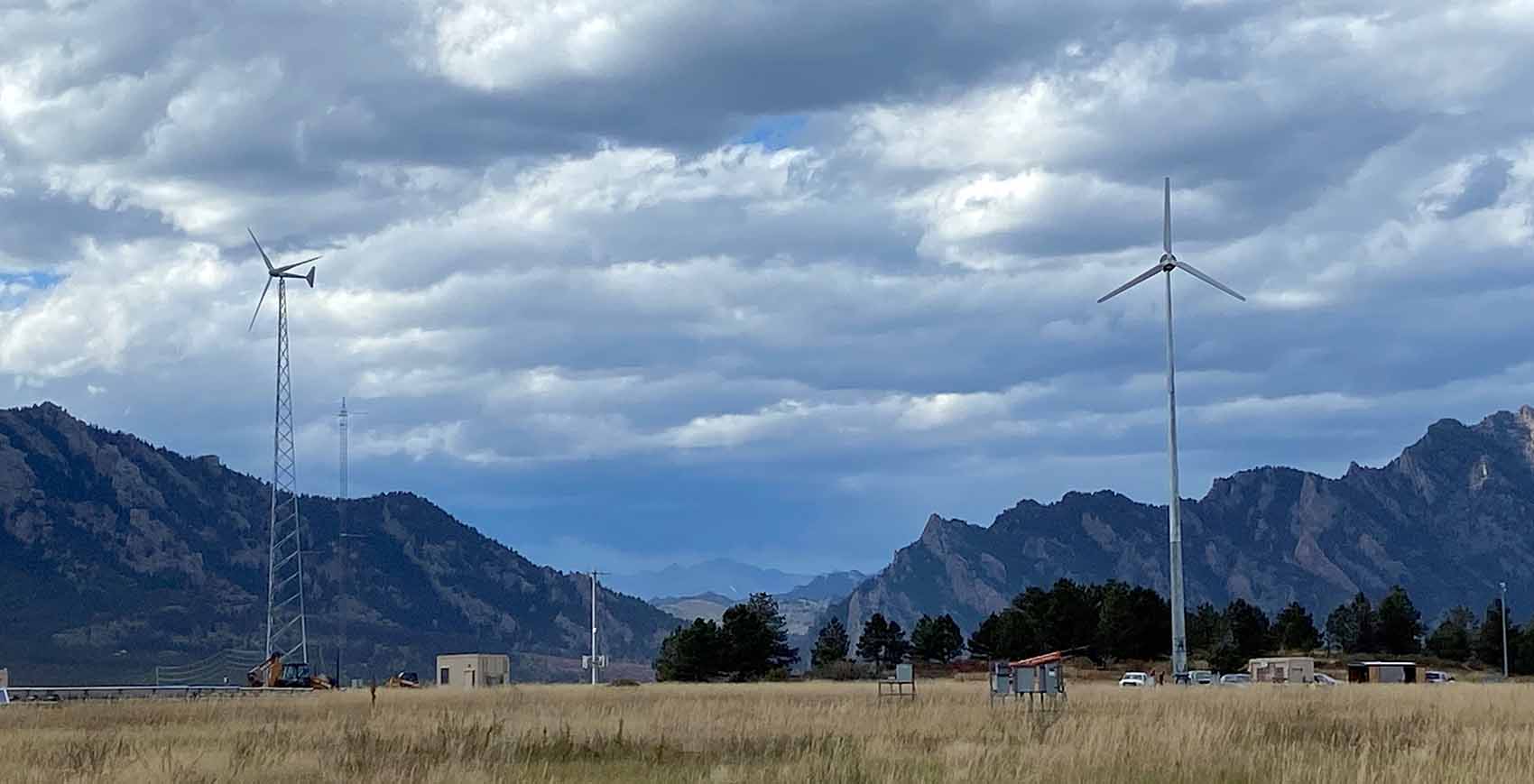
A fraction of the size of today's utility-scale turbines, distributed-scale wind turbines produce power that meets the needs of nearby homeowners, farmers, and rural businesses. Distributed wind turbines are placed close to where the energy is needed—often in areas where wind speeds are low.
Research using these small but mighty wind turbines helps demonstrate that distributed wind can provide a powerful, affordable energy source for rural Americans.
[Embed short, polished video announcing these distributed wind turbines.]
Capabilities
As research components within the U.S. Department of Energy's (DOE's) Advanced Research on Integrated Energy Systems platform, these Flatirons Campus turbines will:
- Help researchers understand how distributed wind energy works with other distributed energy resources, such as solar photovoltaics and battery storage
- Offer important operational variety for wind energy research by representing three of the four primary configurations (or archetypes) of horizontal-axis wind turbine designs
- Validate high-fidelity structural design models
- Determine how these turbines, which are designed for lower wind speeds, respond to the high wind speeds experienced on the Flatirons Campus
- Allow research into the cybersecurity and grid connectivity of distributed energy assets
- Help ensure the reliability and cost-effectiveness of distributed wind turbines.
Distributed Wind Research Turbines
Bergey Windpower Excel 15
- Size: 15 kW
- Tower height: 90 feet
- Rotor diameter: 31.5 feet
- Orientation: Upwind, with blades facing the wind to optimize energy capture
- Power and speed control: Passive yaw using a boom-mounted tail, which uses the force of the wind to orient the turbine rotor, and stall regulated, which limits power capture in high winds by slowing the blades.
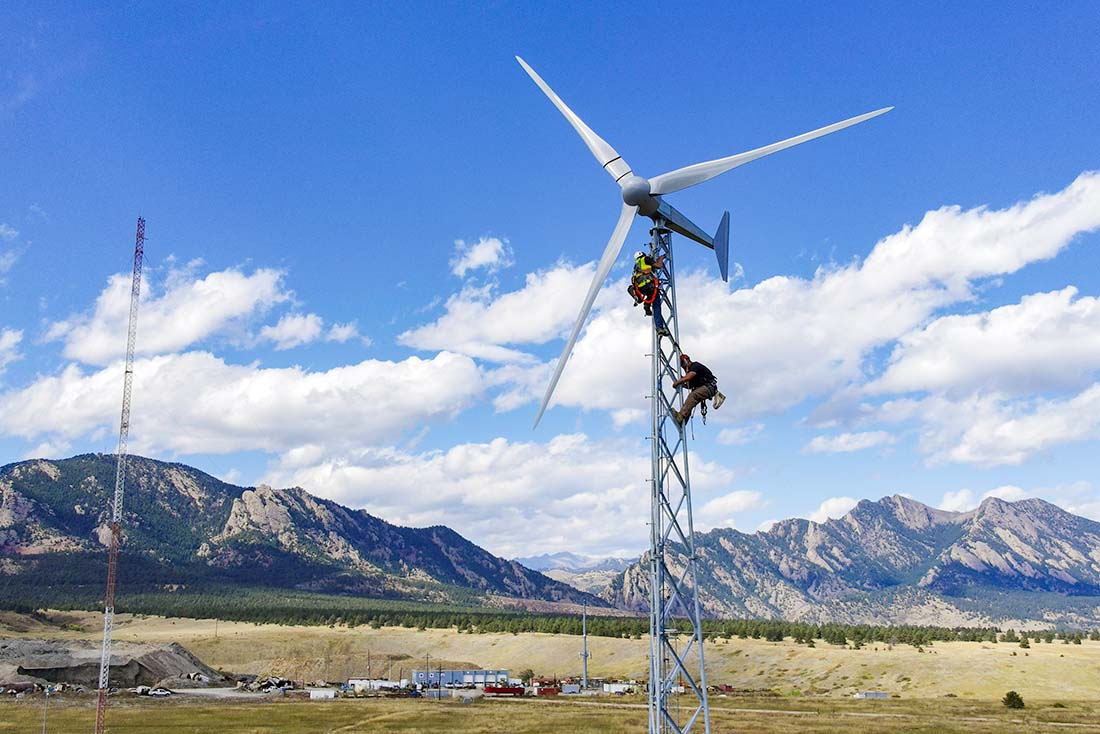
Bergey Windpower's 15-kW wind turbine is ideal for agricultural properties, large rural homes, and small businesses. Photo by Bryan Bechtold and Joshua Bauer, National Laboratory of the Rockies
QED Wind Power PHX20
- Size: 20 kW
- Tower height: 100 ft
- Rotor diameter: 40.3 ft
- Orientation: Upwind
- Power and speed control: Active yaw, which uses computer sensors to point the rotor in the direction of the wind, and stall regulated.

Three small wind turbines installed at the National Laboratory of the Rockies' Flatirons Campus in 2024 will enable research to improve turbine design for better performance and reliability so that more distributed wind turbines can be installed throughout the country. From left, Bergey Windpower Excel 15, QED Wind Power PHX20, and Eocycle XANT M-26. Photo by Gregory Cooper, National Laboratory of the Rockies
Eocycle XANT M-26
- Size: 90 kW
- Tower height: 100 feet
- Rotor diameter: 86 feet
- Orientation: Downwind, with flexible blades facing away from the wind to reduce loads on the blade, tower, and foundation, especially during high winds
- Power and speed control: Passive yaw, using the wind to balance the position of the rotor, and stall regulated.
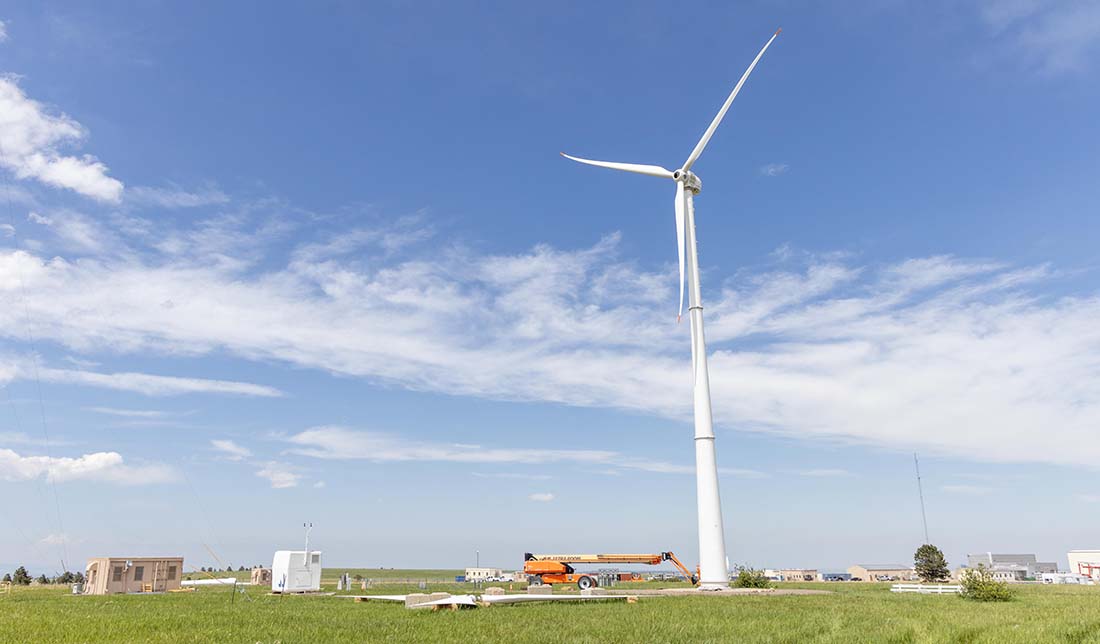
Eocycle's midsized, 90-kW wind turbine can provide power for small businesses and agricultural installations. Photo by Gregory Cooper, National Laboratory of the Rockies
Partner With Us
NLR offers a variety of ways for organizations to access our wind technology expertise:
Partner with us through technology partnership agreements.
Participate in subcontracted wind research through solicitations and requests for proposals.
Use our cutting-edge research facilities to develop, validate, and evaluate wind technologies.
Learn more about NLR's distributed wind research and about working with NLR.
Share

Last Updated Dec. 6, 2025