
2025 US Geothermal Market Report Documents Industry Growth
National Laboratory of the Rockies Analysis Finds Growth Across Geothermal Sectors From Technological Advancements, Investments, and New Applications Like Data Centers and Grid Support

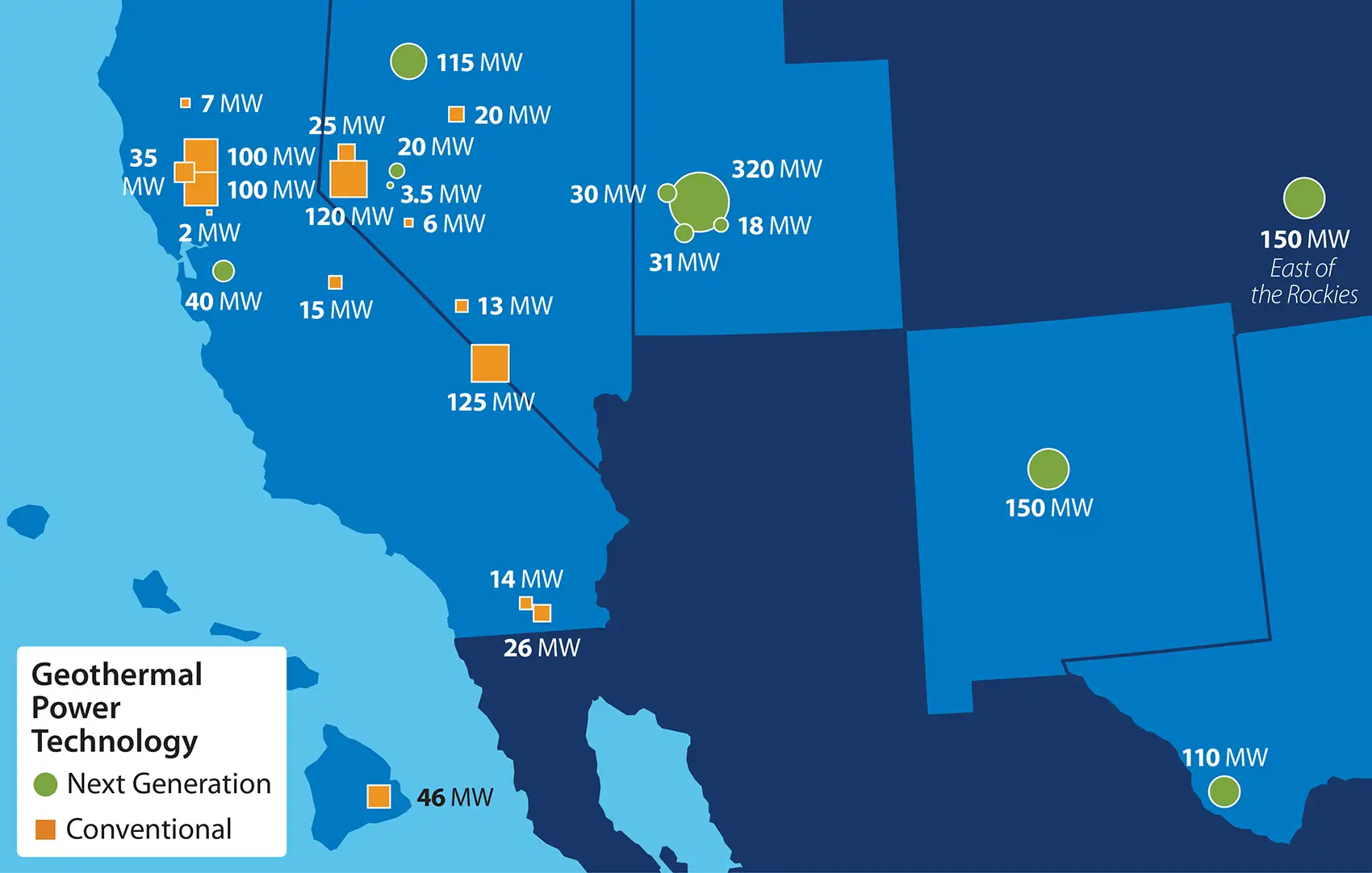
The National Laboratory of the Rockies (NLR) recently published the 2025 U.S. Geothermal Market Report―an in-depth update on the state of geothermal energy in the United States.
Funded by the U.S. Department of Energy (DOE) Office of Geothermal, the report is an expansion of the 2021 U.S. Geothermal Power Production and District Heating Market Report.
The 2025 update documents the growth of the industry over the past four years and includes a new discussion of U.S. geothermal heating and cooling applications, as well as next-generation technologies. An interactive web version of the 2025 report is also available.
“We have seen the power expansion estimated in the 2021 report become reality, with an 8% increase in installed capacity in just four years and 26 new power purchase agreements for data centers, utilities, local communities, and beyond,” said Dayo Akindipe, an NLR geothermal researcher and lead author. “The 2025 update also captures technologies to watch over the next five years that cut across power, heating and cooling, energy storage, and critical minerals.”
State of the Industry
The 2025 report covers the full spectrum of geothermal uses, including power, heating and cooling, storage, mineral extraction, and more.
Key findings include:
- As of 2024, U.S. geothermal power installed nameplate capacity reached 3,969 megawatts-electric (MWe)—an 8% increase from 3,673 MWe in 2020. From 2015 to 2019, geothermal capacity only increased by approximately 1%.
- Since the 2021 report, 26 new geothermal power purchase agreements (PPAs) have been signed, representing more than 1,000 MWe of new capacity commitments under development. Only nine PPAs were signed between 2015 and 2019.
- Several of these PPAs are for power supply to artificial-intelligence-driven data centers.
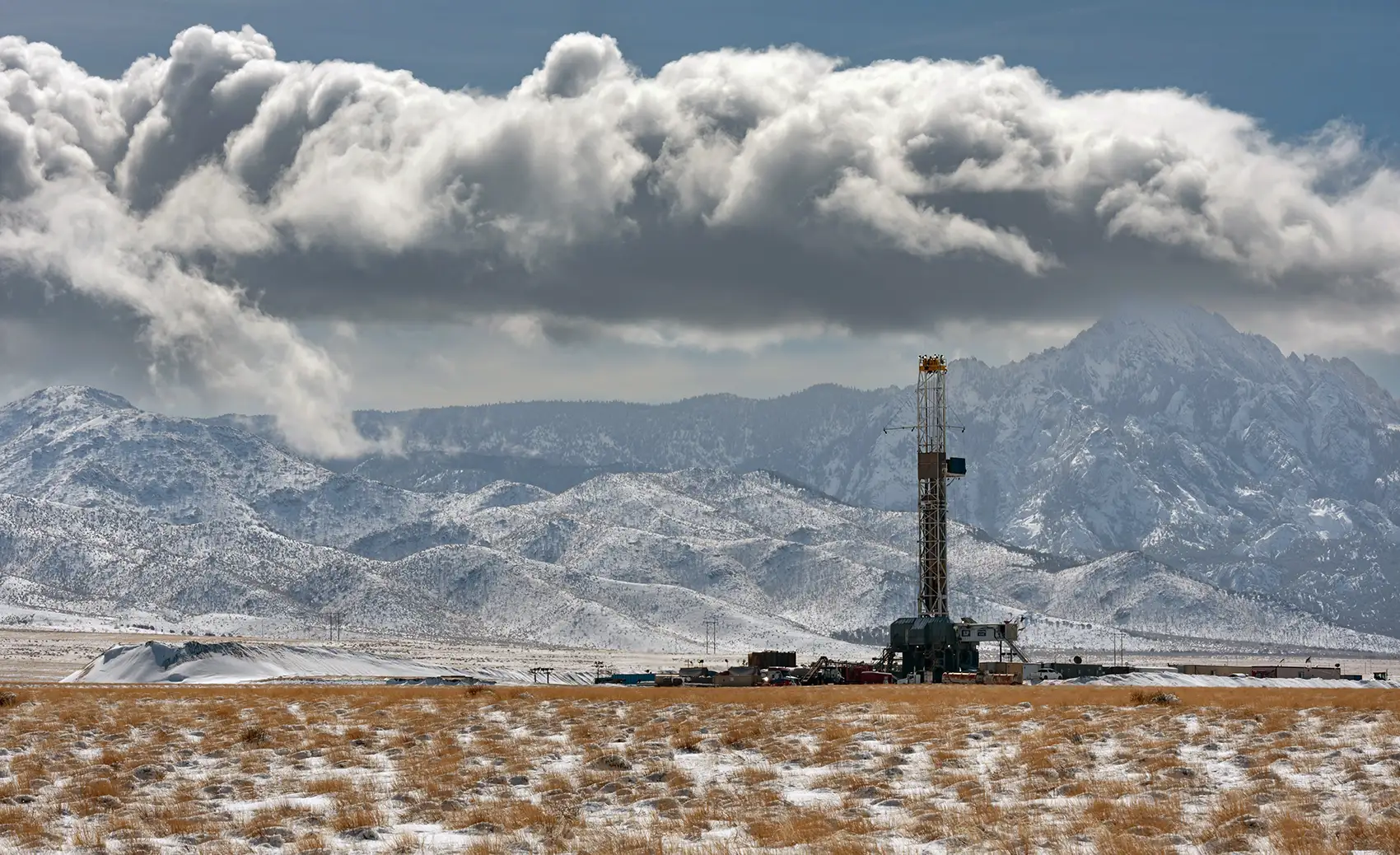
- Improvements in drilling performance at DOE’s Utah FORGE enhanced geothermal system demonstration site yielded a reduction in drilling time from 310 hours in 2020 to 110 hours in 2023, substantially lowering costs.
- The levelized cost of energy for enhanced geothermal systems is declining and is projected to approach that of a 2024 hydrothermal flash plant within the next decade. For conventional hydrothermal systems, that cost remains steady at $63–$74 per megawatt-hour (MWh) for flash-based plants and $90–$110 per MWh for binary plants.
- Since 2021, more than $1.5 billion in private capital has been invested in next-generation geothermal companies, which account for 53% of the new geothermal PPAs. These investments include $473 million in debt financing, indicating de-risking of the technology.
- Geothermal heat pump installations increased across various U.S. regions and sectors, including residential and commercial buildings.
- Thermal energy networks are gaining interest for geothermal district heating and cooling within housing complexes, campuses, and municipalities. Eight states have enacted regulations and announced programs that specifically address the need for these networks within energy utility service territories.
- The report also discusses emerging geothermal applications, such as lithium extraction from geothermal brines and geothermal coproduction in oil and gas reservoirs.
“It is exciting to see how technology advances, ongoing research and development, and increasing investment are helping to raise awareness and possibility for geothermal. These factors are critical to the growth we see reflected in this report, and to geothermal’s continued expansion,” said Lauren Boyd, DOE’s Office of Geothermal director.
"This comprehensive report offers insight for industry experts as well as those just entering the geothermal market," said Amanda Kolker, NLR laboratory program manager for geothermal and geosciences. "We look forward to seeing continued advancements in emerging technologies, de-risking of conventional technologies, and improved access to reliable resource data and analysis in the years to come."
For more information on the state of geothermal in the United States, visit the 2025 U.S. Market Report webpage or view the full report.
Last Updated May 28, 2025