
September 2020
News Release: Three Grand Prize Winners of the Fish Protection Prize; Deadlines for Two Additional Hydropower Prizes
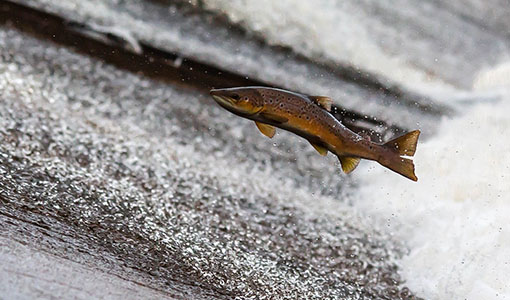
Through the Fish Protection Prize, the U.S. DOE Water Power Technologies Office solicited sustainable solutions that allow hydropower and fish to thrive side by side. Additionally, the I AM Hydro Prize aims to strengthen hydropower by applying advanced manufacturing technologies.
NREL Researchers Share $40 Million with Partners To Scale Next-Gen Biotechnologies
A combined award of nearly $40 million from the U.S. Department of Energy's Bioenergy Technologies Office will support NREL researchers, along with partners from universities and industries, to develop and scale up 11 groundbreaking bioenergy projects.
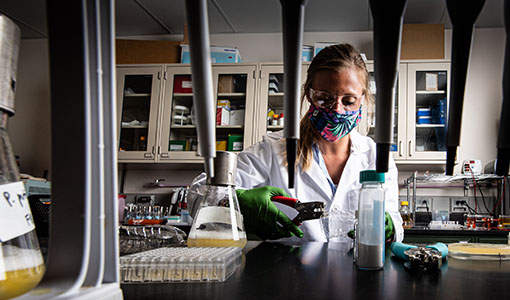
Scientists Offer Companies a Novel Chemistry for Greener Polyurethane
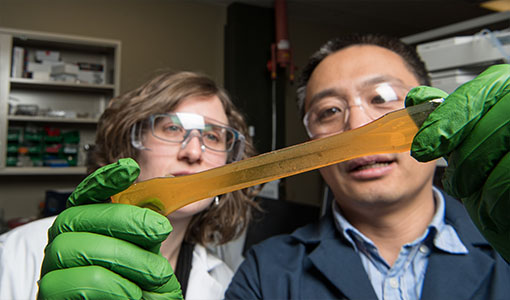
Through a novel chemistry using nontoxic resources like linseed oil, waste grease, or even algae, chemist Phil Pienkos and colleague Tao Dong, an expert in chemical engineering, have developed a groundbreaking method for producing renewable polyurethane without toxic precursors.
USAID-NREL Partnership Offers Solutions To Accelerate Distributed Photovoltaic Market Growth in India
Improvements to regulations governing PV-plus-storage and better standards for PV quality and safety will help India achieve their distributed PV targets.

Can Revegetation Return PV Site Soil to Its Untouched Glory?
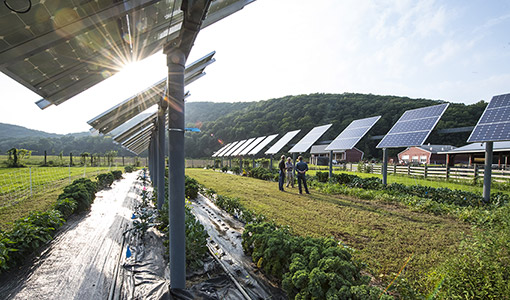
In a recently published journal article, NREL researchers investigated the soil impacts of solar PV array installations and considered how energy and agriculture can coexist.
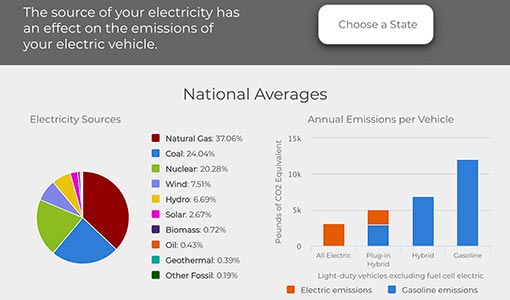
Updated Tool Makes Calculating EV Emissions Easier, More Precise
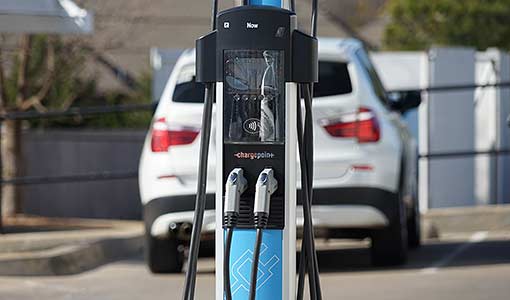
Electric vehicles (EVs) typically produce fewer emissions than conventional vehicles, but when measuring emissions, the source of electricity matters. The emissions benefit varies from one state to the next depending on how the electricity to charge the battery was generated.
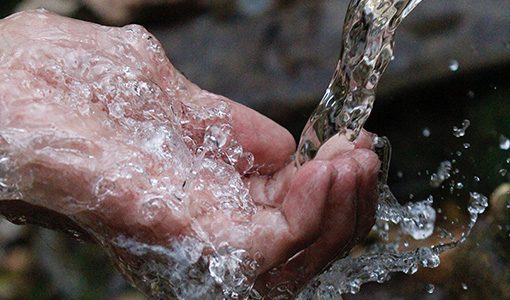
Calling All Water Technology Innovators: NAWI FOA in Intensified Brine Management Open for Applications
Do you have the technological know-how to develop the desalination systems of tomorrow? Help strengthen the United States’ long-term energy and water security by joining forces with the largest federal investment in water treatment research in 50 years.
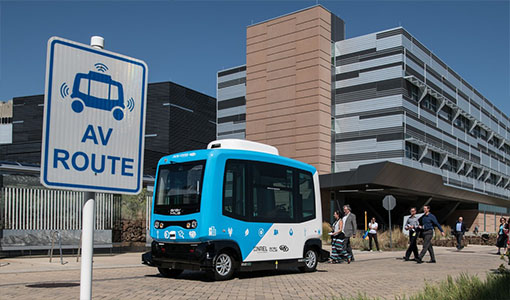
Automated Mobility District "Digital Twin" Provides Insights for Urban Transportation Systems
The Automated Mobility District (AMD) modeling and simulation toolkit makes it easier for researchers and city planners to quantify the advantages and disadvantages of similar transportation evolutions.
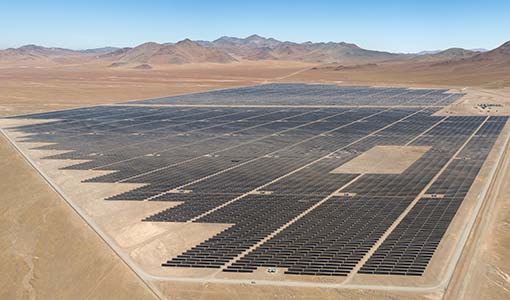
Renewables Rescue Stability as the Grid Loses Spin
Across the world, renewable power is displacing traditional generation, but can renewables also replace the critical stability functions that go with it? NREL studies are confirming in the field and on live power systems that solar, wind, and hybrid power plants can provide their own source of grid stability—potentially unlike anything currently on the grid.
Souped-Up STEM Portal Broadens Horizons of Prospective Water Power Workforce
We are inspiring tomorrow's water power workforce. Visit the updated STEM Hydropower and Marine Renewable Energy Portals and learn how.
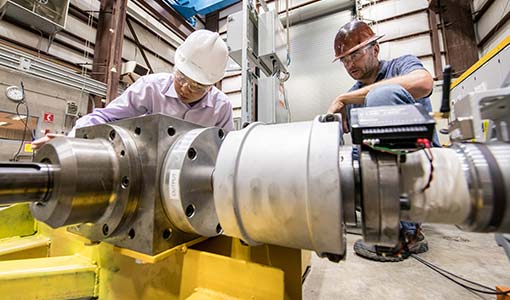
NREL Selects U.S. Manufacturers To Develop Next-Generation Distributed Wind Technologies
Seven U.S. manufacturers selected to enter into negotiation to receive DOE Competitiveness Improvement Project awards, designed to accelerate deployment of small- and medium-sized wind turbines across the country and lower the cost of energy from distributed wind.
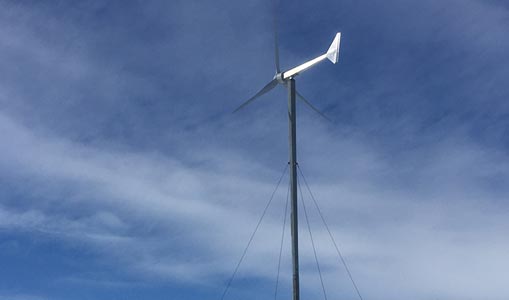
Transforming Saltwater into Prize Winnings: Waves to Water Industry Teams Win Big in DESIGN Stage
Among the winners of the U.S. Department of Energy's Waves to Water Prize DESIGN Stage, five industry teams are now ready to take their desalination design to the next level.
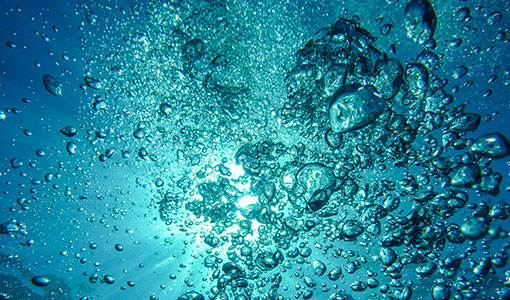
From Lab to Tundra: Building a More Efficient Future with Rural Alaska
In a small Athabascan village on the Yukon River, a new house is going up. Tribal leaders in Huslia, Alaska, hope homes like this will attract health care and law enforcement workers to the remote Arctic community. Staying warm is the center of life at this latitude and the driving purpose of the Cold Climate Housing Research Center.
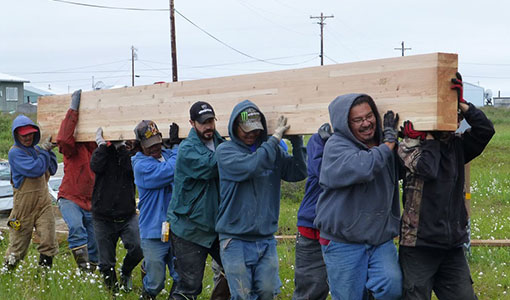
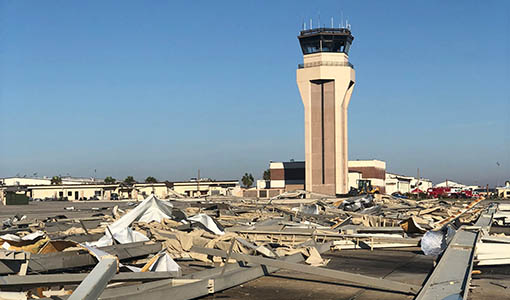
Hurricane Puts NREL Resilience Analysis Tool to the Test
The devastating hurricane that struck northwest Florida in October 2018 proved an ideal case study for a risk assessment tool developed by NREL.
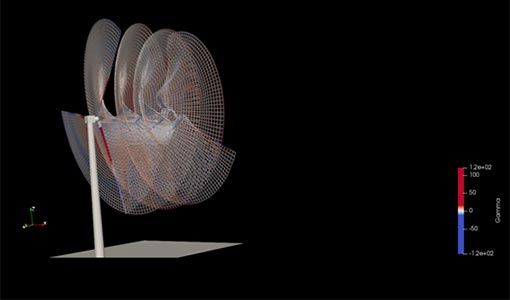
New Open-Source Modeling Tool Enables Design of Large, Flexible Wind Turbines
NREL recently released cOnvecting LAgrangian Filaments (OLAF), a new wake module included in NREL's OpenFAST wind turbine simulation tool. Programmed to generate realistic representations of the wakes of large, flexible turbine blades, OLAF can provide a complex, accurate model of the physics of turbine wakes, yet it can still run on a personal computer.
August 2020
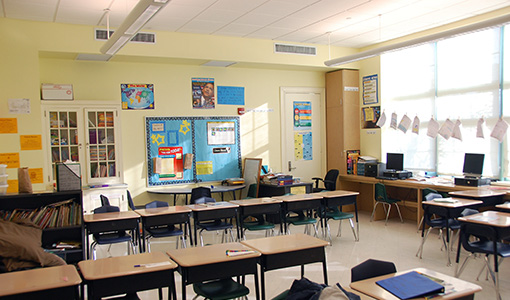
Zero-Energy Schools Elevate Expectations
A new online course called "Achieving Zero-Energy Building Design" was adapted from the "Advanced Energy Design Guide for K-12 School Buildings" and unveiled in August. The training will give building professionals the knowledge to design zero-energy schools in any climate in the United States.
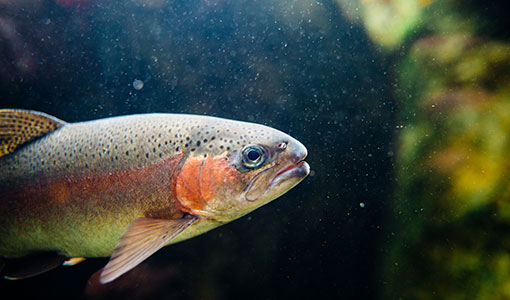
Nine Teams Swim Toward the Fish Protection Grand Prize at the American Fisheries Society Virtual Annual Meeting
Nine teams vie for the Fish Protection grand prize to be announced at the American Fisheries Society Virtual Annual Meeting in September.
Q&A with Sakshi Mishra: Addressing the Challenges of Climate Change and Advocating for Women in STEM
Finding energy solutions for a changing global climate and advocating for women to choose careers in science and technology drive Sakshi Mishra's mission as an energy researcher and power systems engineer.

Annual Technology Baseline Expands To Include Transportation Data
The first-ever Transportation Annual Technology Baseline consolidates U.S. vehicle and fuel technologies data for current and future markets through 2050.
NREL Seeks Turbine Manufacturer Partners for Distributed Wind Research
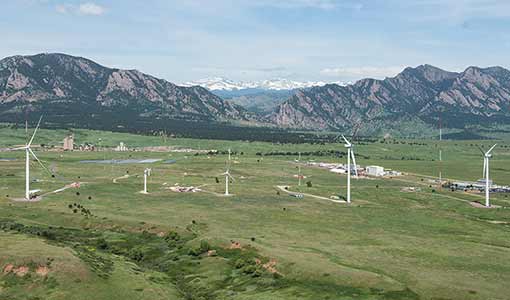
In an effort to advance distributed wind energy innovation, the U.S. Department of Energy's National Renewable Energy Laboratory invites manufacturers to express their interest in installing distributed-scale wind turbines as research hardware at NREL's Flatirons Campus, located south of Boulder, Colorado.
Last Updated May 28, 2025