
October 2021
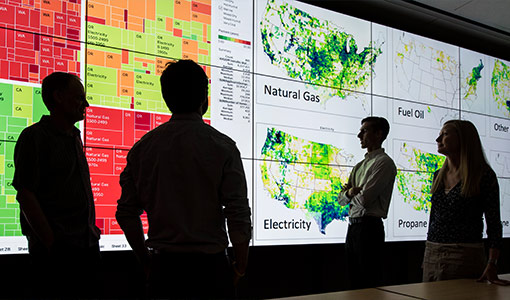
News Release: New Data Set Quantifies How and When Energy Is Used Across All Major U.S. Building Types and Climate Regions
The data set released by NREL researchers, in collaboration with Lawrence Berkeley National Laboratory and Argonne National Laboratory, is critical for utility planners, regulators, state energy offices, researchers, and building owners to understand ways to best manage energy use.
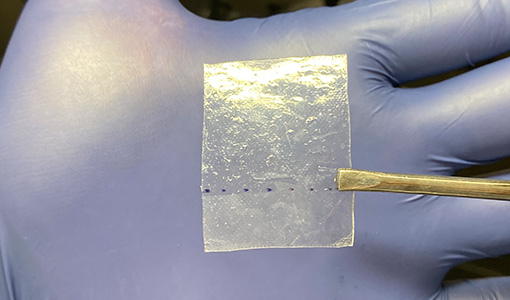
Researchers Discover Another Way To Sequester Lead in Perovskite Solar Cells
Scientists at NREL and Northern Illinois University have successfully prevented lead from escaping damaged perovskite solar cells. The research effort is their latest work in addressing concerns about potential lead toxicity.
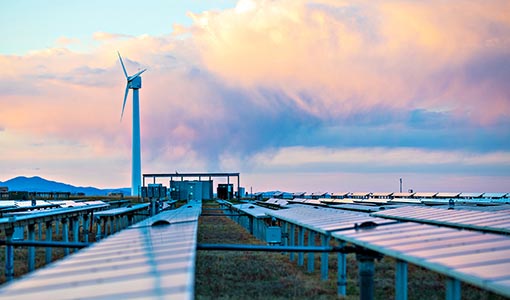
Large-Scale Experiments Demonstrate Advanced Controls for Autonomous Energy Systems
In a breakthrough for the autonomous energy systems research program, NREL has demonstrated new methods for optimizing more than 1 million distributed energy resources with autonomous controls. The updated approach cuts the computation time by more than tenfold, enabling real-time distribution system optimization for economics and stability in high-renewable power systems.

Nothing To Fear for High-Renewable Systems: NREL Shows Scalable, Resilient, and Secure Systems With Communication-Less Controls
NREL has shown that relatively simple controls can enable power grids to operate with 100% wind, solar, and storage, without the need for dedicated device-to-device communications.
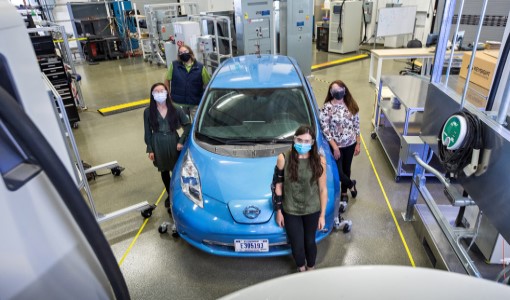
Electric Vehicle Charging at Retail Locations Offers Convenience, Building Integration Opportunities
A new study from NREL compares load profiles from potential EV charging stations against those of big-box retail grocery stores to assess how the electricity demands of specific sites may change by adding EV charging.
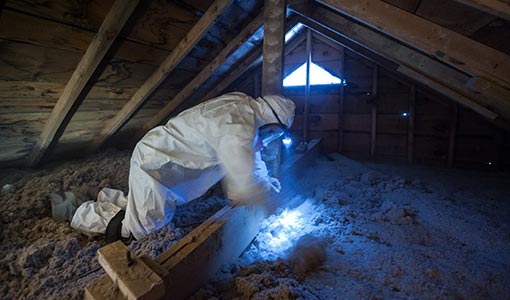
NREL Celebrates 45 Years of Energy Burden Relief for Low-Income Families in Weatherization Program
A favorite sweater, an open window, or a simple press of a button are all it takes for some of us to enjoy the perfect temperature in our homes. But many low-income households are battling their thermostat and struggling with their electric bill—paying a high price for energy-inefficient homes they have no control over.
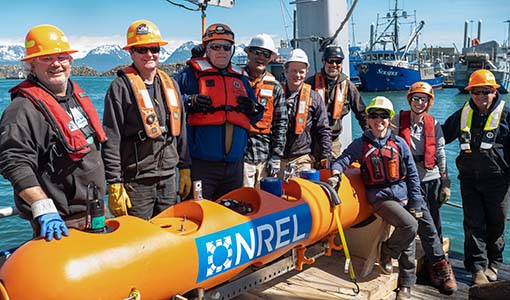
Turning the Tide for Renewables in Alaska
NREL is leading a multi-laboratory team to deploy three underwater moorings to collect data in Cook Inlet, a highly energetic corner of the Pacific Ocean off the coast of Alaska.
NREL Drops the Bass on Solar Panels (for Science)
NREL researchers are not only skilled at making photovoltaic (PV) cells and modules. They are also world-class destroyers of PV modules. The goal is to discover and understand how these modules might degrade when installed outside for many decades. This helps other NREL researchers and engineers in the PV industry design better, longer-lasting modules.
Connecting the Dots To Enhance Energy Efficiency, Workforce, and Low-Carbon Buildings
A true living laboratory, NREL added a small but noticeable splash of color to its cafeteria building. Five quantum dot windows were installed this summer as a demonstration project evaluating innovative windows technologies, in collaboration with UbiQD and the Wells Fargo Innovation Incubator program.

News Release: R&D 100 Awards Honor Two NREL Innovations
R&D World magazine today presented NREL with two of its annual R&D 100 Awards for research innovations.
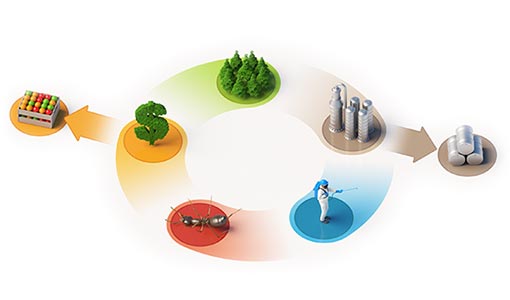
Three Bio-Based Innovations Edge Closer to Market With Private-Public Funding
A more sustainable farming sector, lower industrial emissions, more efficient biochemical production—NREL scientists and industry partners expect sizable benefits from three new projects to commercialize bioinsecticides, enzymatic carbon dioxide (CO2) utilization, and cell-free biocatalysis.
NREL Caps Off a Year of Accomplishments With National Bioenergy Day
On October 20, NREL will join organizations and individuals nationwide in celebrating the ninth annual Bioenergy Day. The day commemorates advancements in the use of biomass to produce energy from sustainable resources such as farm, forestry, and other plant waste.
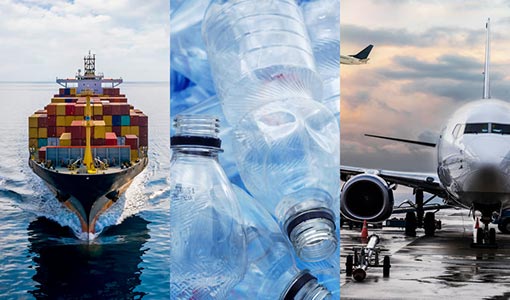
With NREL's Feedstock Research, Algae and Garbage Could Be Ingredients for Zero-Emissions Fuels of the Future
In theory, over 1 billion tons of biomass could be sustainably collected and processed into biofuels by 2030 in the United States, according to U.S. Department of Energy analysis.

Energy Storage Ecosystem Offers Lowest-Cost Path to 100% Renewable Power
As states reach higher toward 100% renewable operation, energy storage will be key to enabling a more variable power supply. But no single technology will be a silver bullet for all our energy storage needs.
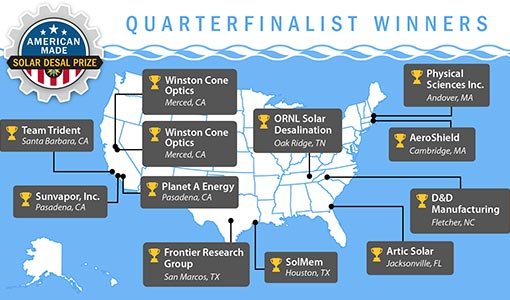
Solar Desalination Prize Round 2 Quarterfinalists Get To Work Building Teams
Oct. 28 teaming webinar offers potential partners the opportunity to learn about winning concepts and network with quarterfinalists.
Sharing the Sun Market Report Details Expansive Growth, Recent Trends in Community Solar
New market report shows which states are leading growth in community solar.
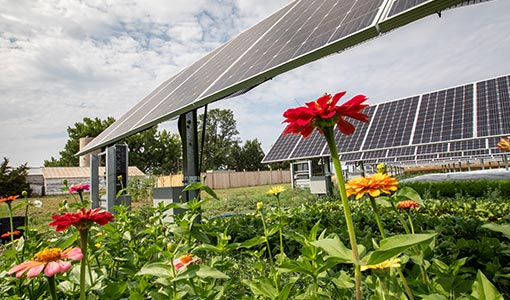
New NREL Partnership Is Nothing To Bawk At
NREL is partnering with the USDA-Agricultural Research Service (USDA-ARS) to design, build, and evaluate energy use models to increase energy efficiency in broiler houses.
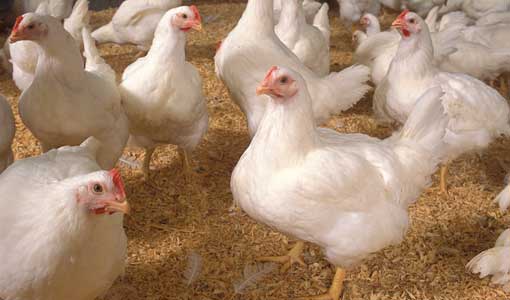
Modeling a Future for Sustainable Energy Storage
As manager of the Mobility Infrastructure and Impacts Analysis (MIIA) group, NREL's Maggie Mann will be the first to tell you that electric vehicles (EVs) alone are not a perfect solution to achieve sustainability within the transportation industry.
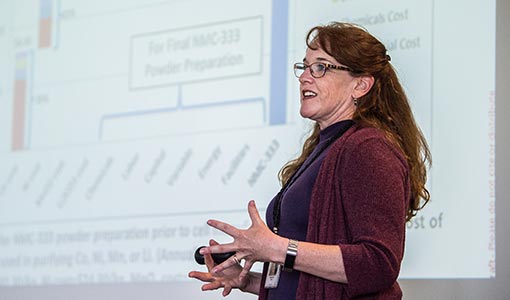
Where the East Meets the West: Interconnections Seam Study Shows Value in Joining U.S. Transmission Grids
A novel multi-model analysis led by NREL explores the benefits and costs of uniting two of the world’s largest power systems.
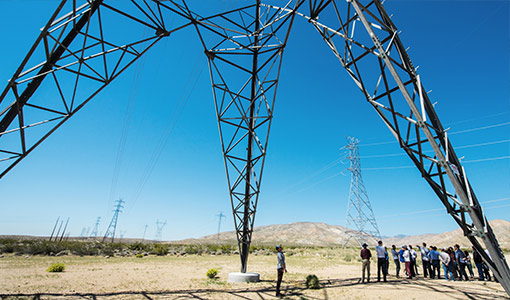
Looking at Geothermal Energy Through an International Lens
From Iceland to Alaska to France, NREL geoscientist Amanda Kolker has studied geothermal energy all around the world. After graduating with a bachelor's degree in geology, Kolker went to study volcano and glacier interactions in Iceland but was quickly distracted by Iceland's vast geothermal energy systems.

Last Updated May 28, 2025