
Early-Career Spotlight: From Coast to Lab: How Melissa Kreider Found Her Element

Welcome to the Materials, Chemical, and Computational Science (MCCS) Early-Career Spotlight, a monthly feature showcasing the National Laboratory of the Rockies' (NLR’s) early-career researchers' interests, motivations, and achievements. This month features Melissa Kreider, who has been a materials scientist at NLR since 2022.
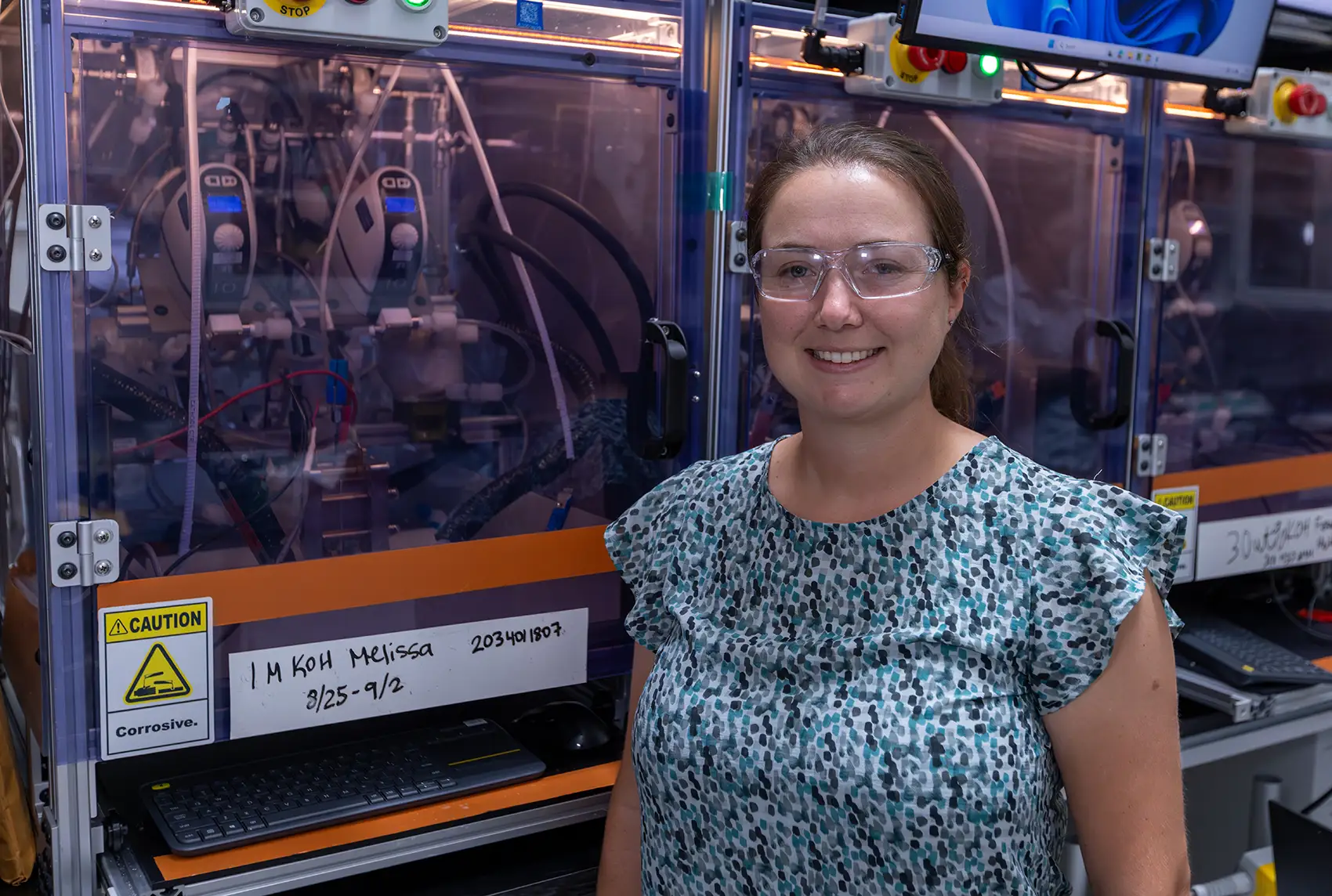
Growing up near the water on Connecticut’s Long Island Sound, Melissa Kreider always loved the coast, though she also saw its vulnerability.
“A tropical storm my senior year of high school caused flooding and a weeklong power outage,” she recalled.
Although Kreider always enjoyed math and science, history was her first academic passion. But when it came time to choose a career path, she followed her scientific curiosity.
“I chose to go with my science side—both out of practicality, and because I had found that I enjoyed the problem side of science and trying to find answers about how the world works.”
That choice led Kreider to earn a degree in chemical engineering from the Massachusetts Institute of Technology, where she balanced her coursework with a minor in ancient and medieval studies. Next, she went to Stanford University for her Ph.D., which was focused on catalyst development for fuel cells.
“I found that I really enjoyed using characterization tools to understand how materials work and how they fail,” she said.
Now at the National Laboratory of the Rockies (NLR), Kreider focuses her research on improving the performance and durability of electrochemical systems, including “water electrolysis, so the reverse of what I did for my Ph.D.,” she explained.
At NLR, her workdays are anything but routine. She spends her time fabricating and assembling electrolyzer components, conducting electrochemical testing, analyzing data, and meeting with collaborators at other labs, universities, and companies.
“I feel really fortunate that my typical day can vary so much. The main component of my research is to test electrolyzer cells, so my lab work is usually focused on fabricating and assembling the electrolyzer components and conducting electrochemical testing,” she said. “Some of the major challenges we are focused on are lowering costs and increasing the lifetime of the device. My projects have focused on translating new catalysts from fundamental tests to electrolyzer-scale, designing electrodes to improve the utilization of catalysts, and understanding degradation mechanisms for catalysts and other device components.”
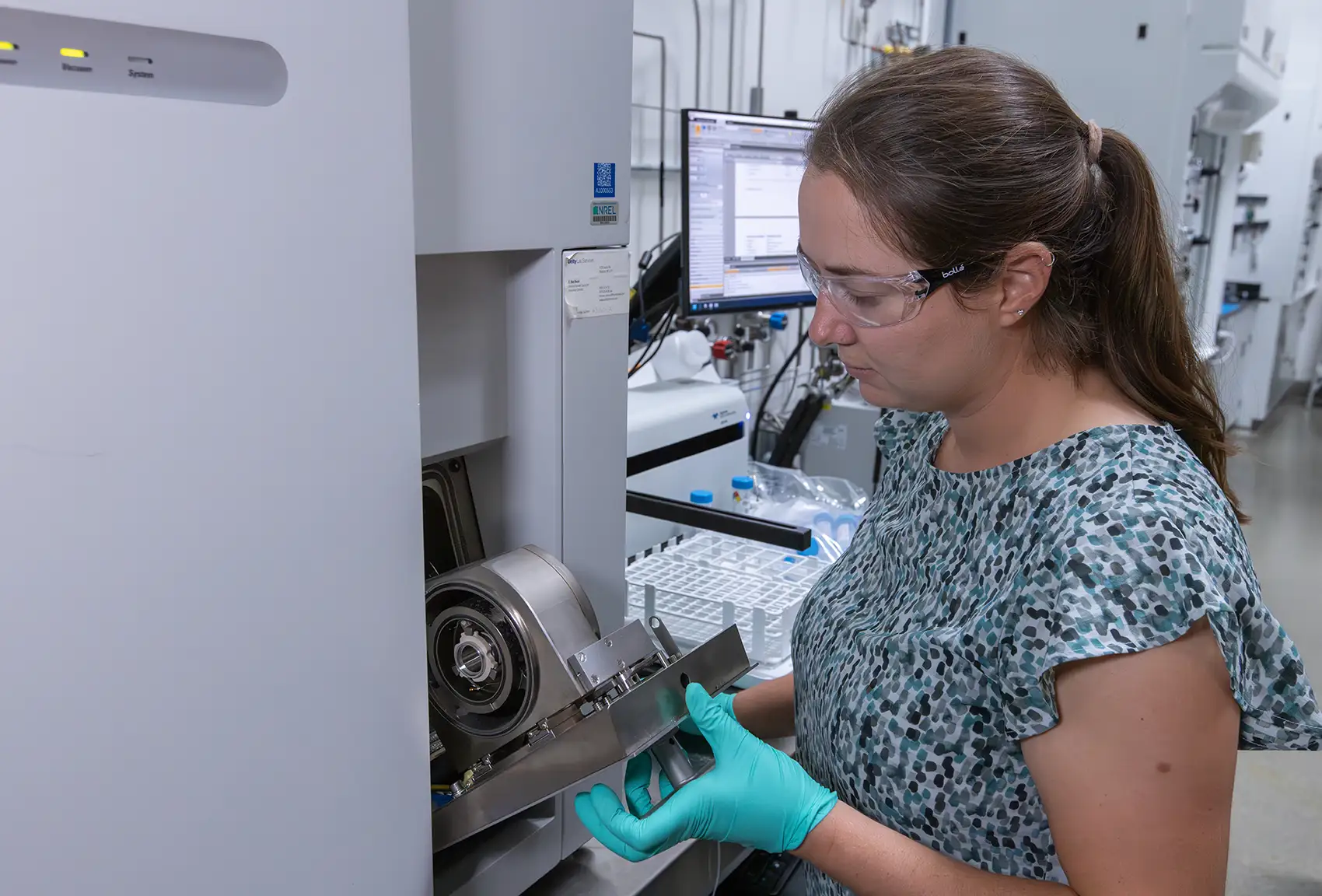
A recent interdisciplinary project required her to directly couple an electrolyzer with a photovoltaic cell to produce hydrogen without any external electricity input.
“These outdoor tests have been exciting, watching hydrogen be produced directly using only sunlight and water,” she explained. “They have also raised interesting scientific questions about electrolyzer durability at low temperatures and through variable operation as the solar irradiation changes throughout the day and overnight.”
She spends much of her time also writing papers and data visualization.
“While the process can be challenging, I really enjoy getting to think deeply about the data and putting together a story from it. Among Kreider’s most rewarding experiences has been collaborating with others
“I work with great collaborators at NLR, from other electrolysis researchers to theoreticians who help us to understand the fundamental behavior of our materials. My research projects have also involved a lot of collaboration and meetings with other national labs and with project partners we support at companies and universities, such as a recent effort to develop a baseline for AEMWE performance and understand cross-lab variations.”
Of the collaborations, some of the most memorable experiences have been mentoring young scientists—both undergraduate and graduate—to solve tough experimental challenges.
“It’s been a lot of fun to be a part of their scientific journeys and help them to become independent researchers. It was so satisfying to see [my Science Undergraduate Laboratory Internship (SULI) intern] succeed in developing a capability to characterize catalyst dissolution during device operation; this is a critical issue for extending electrolyzer lifetimes,” she said. “Ultimately, I think my favorite moments have been from working closely with my teammates to conduct difficult experiments and really understand how our materials work.”
Outside the laboratory, she enjoys exploring Colorado with her sister—who also works at NLR— and her cousin.
“We’re always on the lookout for moose, elk, and other Colorado wildlife,” she said.
When she is not outdoors, she is likely baking, reading, or spending time with her “two adorable cats, Eleanor and Louisa.”
For Kreider, every experiment, hike, and pastry outing connects back to the same core motivation: curiosity and connection.
“The variety keeps me from getting bored,” she said. “I get to work on real problems that can have real-world impact, while still being able to do good science and communicate it freely.”
Learn more about NLR’s Chemistry and Nanoscience research.
Last Updated Jan. 22, 2026