
She Wanted To Write Fantasy. Now, She Is Rewriting Recycling
Meet Taylor Uekert, the Gymnast-Turned-Nanoengineer Who Harnesses Molecular Machines To Remake Plastics, Chemicals, and More

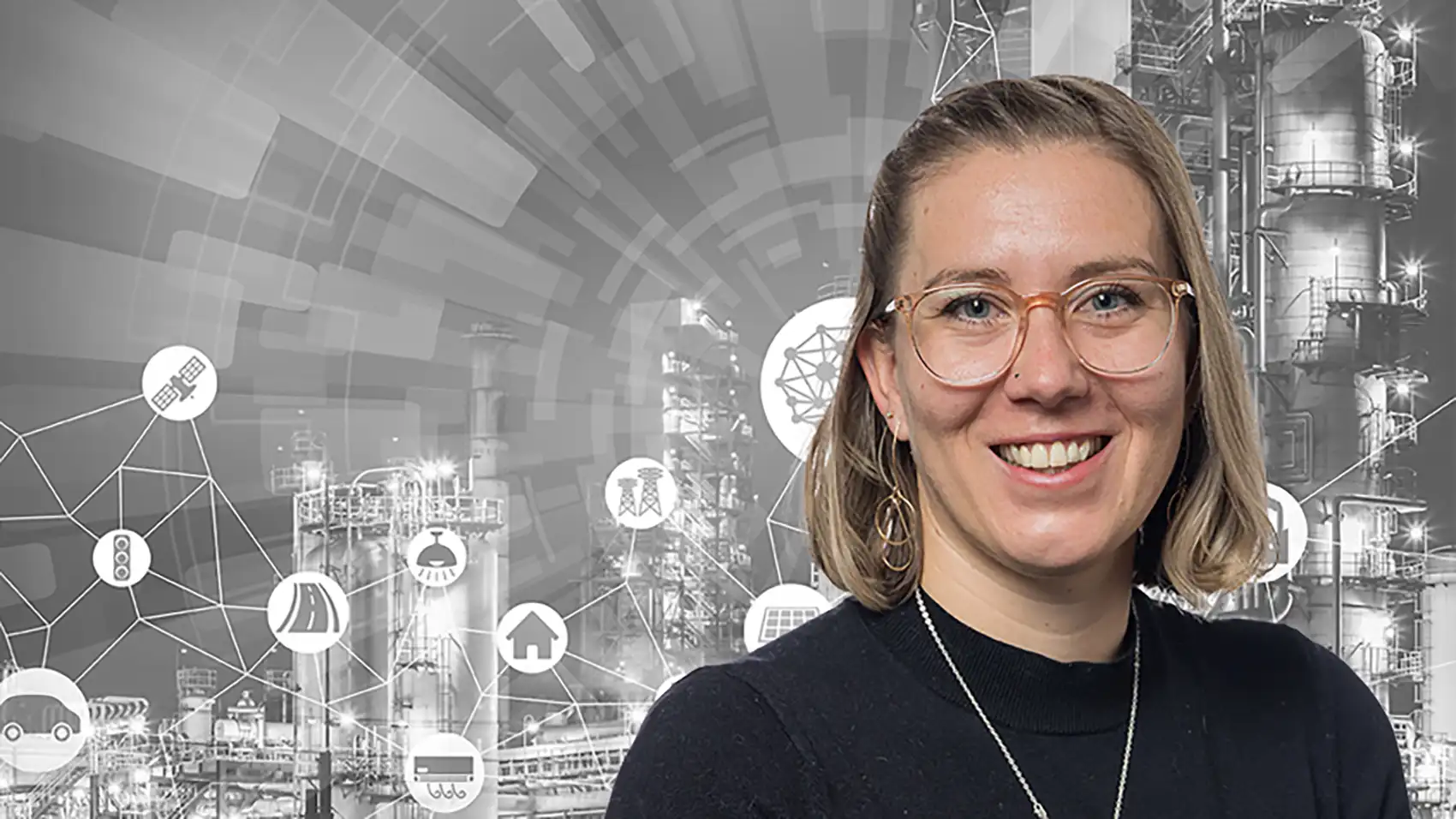
Three days after 9-year-old Taylor Uekert moved to the foothills outside San Diego, her parents woke her and her brother in the middle of the night.
“Get up and get to the car,” they said. “There’s a fire!”
Flames shadowboxed above the mountain just behind their house. No alert or evacuation notice had been issued. The fire was too new.
Uekert grabbed for things. Her love-flattened teddy bear, Ben, and a few books. As she hustled out the door and to the car, she looked back. Ashes and embers feinted in the night, drifting toward her house. She got in the car.
“And then we were just trying to get out,” Uekert said. “It was a kind of out-of-body experience.”
They made it out.
Miraculously, their house survived too. But that experience changed how Uekert perceived her previously predictable world.
Today, Uekert is a senior researcher at the National Laboratory of the Rockies (NLR), formerly known as NREL. Before she joined the laboratory, she studied nanoengineering, which taught her how to manipulate the molecular skeletons that form trees, milk jugs, medicines, and everything else.
“Nanoengineering ticked the box of how the world works and how I could start to help fix it,” Uekert said.
At NLR, she is helping to fix the world by improving imperfect processes, like plastic recycling and chemicals production. She also helps researchers bypass pitfalls that could prevent their early-stage technologies from getting out of the lab and into industries, homes, or the power grid.
“I want my work to be useful to as many people as possible,” Uekert said.
In the latest Manufacturing Masterminds Q&A, Uekert shares what she really wanted to be when she grew up, why some people think recycling is broken (but she does not), and why she could not say no when NLR offered her a position. This interview has been edited for clarity and length.
How did you get from the San Diego foothills to NLR? What’s your origin story?
I like that, “origin story.” That makes me sound like I’m either a villain or a hero. The world can be super powerful, especially when it goes wrong. I wanted to come up with solutions, so I ended up going into bioengineering because I was like, “Oh, biology. That’s how the world works. That’s how I'll start to fix things.”
How did that go?
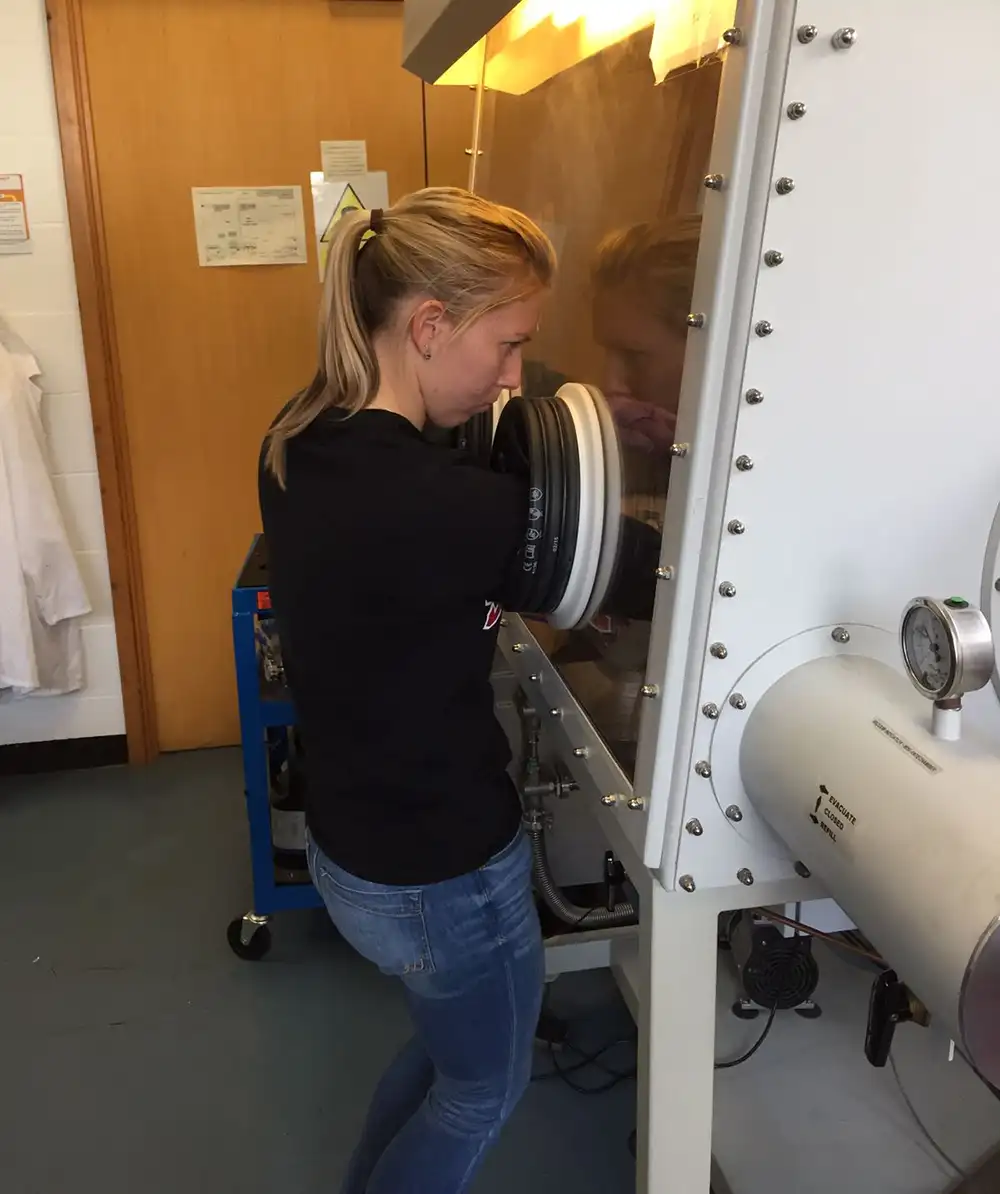
I did not like it. I worked in a lab during undergrad, and it was a lot of cell work, a lot of mouse work. And it was just not for me. Then I sat in on this nanoengineering course that was all about how the world is built up from atoms and we can manipulate how those atoms interact. If you know why things exist and how they are made, you can change their properties and how they behave.
That makes me think of you, age 9, wanting to manipulate the fire, to change it on a molecular basis.
I wish I had been smart enough to do that.
That would be your origin story if you end up a superhero.
Exactly.
So, you pursued master’s and doctoral degrees in nanoengineering at Cambridge University, right?
Yes. I studied how we can convert plastic waste into fuel using sunlight. That was super fun, and I started thinking a lot about how we measure a technology to decide if it is actually environmentally friendly. We rarely have numbers to back that up. I wanted to learn about techniques, like life-cycle assessment and techno-economic analysis, which we can use to measure the effect a technology has on the environment and the economy.
It sounds like you always knew you were destined for something in the sciences. Is that right?
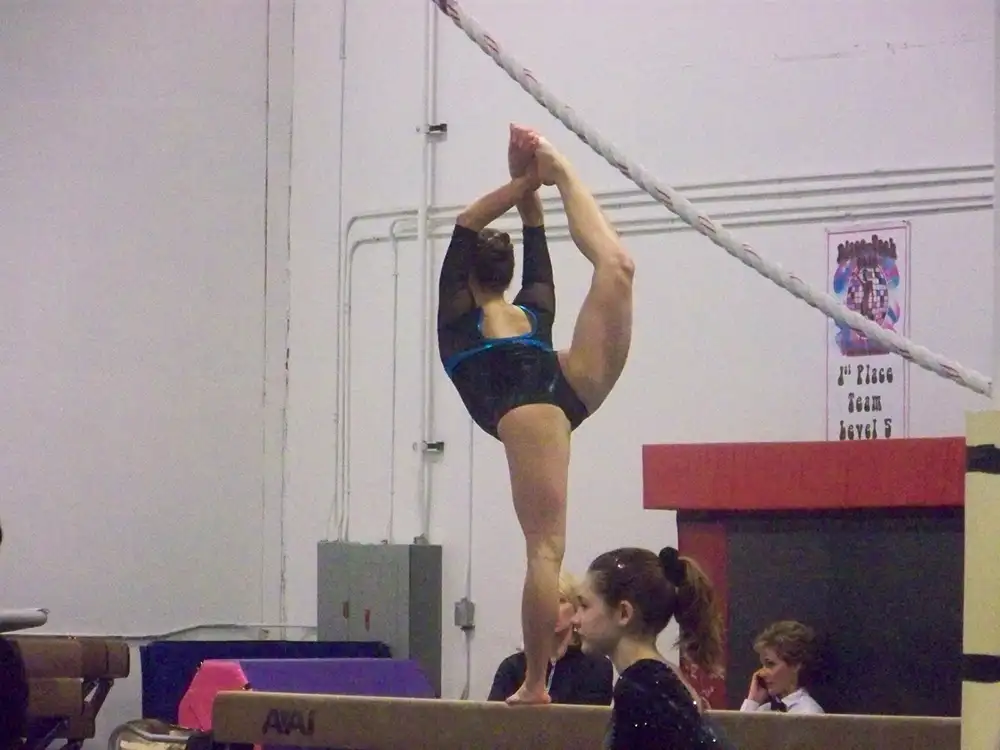
I would say no. I get bored easily. I’ve always dabbled in a bunch of different stuff. Growing up, I wanted to be a creative writer. I still do some writing in my spare time, mostly fantasy. I also did gymnastics for 11 years. I competed at the national level, but I was never going to go to the Olympics. Science probably took over partially because my mom told me, “If you want to be a great writer, you need to experience the world first. And a STEM (science, technology, engineering, and mathematics) career is one way to do that.”
That's very practical.
Both my mother and I are very practical people, yes.
OK, back to your career. How did you end up at NLR?
My husband is from Italy. We were planning to stay in Europe after I finished my Ph.D. This was [during] COVID times, so the job market was weird. NLR was the only U.S. position I applied for. And I remember when I got it, I was like, “I cannot turn NLR down.” It’s such a well-regarded place to work. I had the best conversations with the people who interviewed me. After a couple years’ long distance, I convinced my husband to come over too. Now, life is good.
You came to NLR to focus on those analysis techniques you mentioned earlier, right?
I took a big leap of faith. NLR took a leap of faith on me as well. I had basically no background in analysis. But I was eager to learn, plus my Ph.D. project combined what I’d say are two of the biggest challenges we face: energy and materials. Those two pieces form our overall impact on the environment. So, working in both of those spaces, that really hit the sweet spot for me.
Analysis is kind of an NLR sweet spot too.
Yeah, absolutely. And I’ve been here ever since.
Tell me about your current work. What are you doing?
There are two main pieces. The first is using analysis to pinpoint the economic and environmental performance of new technologies, specifically for plastic recycling and making chemicals from waste. The second is making analysis tools that help identify problems at the earliest stages of research. Say I’m working on a new photocatalyst in the lab. I want to see that go out into the world and make a difference. Can I figure out the pain points in terms of cost or pollution or water use and start to fix those now before I scale it up and it becomes much harder to fix?
Have you ever been surprised by this analysis?
Yes, we did some analysis of mechanical recycling, which is what we use to recycle plastics today. There’s a lot of hype around plastic recycling being broken. But really, mechanical recycling is relatively cheap and low energy. What’s broken is collecting plastic. If you put your plastic into the blue bin, most likely it’s going to be recycled. But if it doesn’t get in the bin, there’s no way to bring it back into our economy. That surprised me because, as researchers, we want a technological solution. But there isn’t one. It’s a matter of accessibility.
How does your work overlap with manufacturing?
Many products we manufacture are tied to plastics. It’s in our clothing, water bottles, laptops. It’s the same when it comes to chemicals. We use chemicals in cleaning agents, pharmaceuticals, healthcare, beauty products. And if we can produce those plastics or chemicals from waste streams, for example, you can change the supply chain but keep it within known manufacturing processes that we use today.
What future work are you most excited about?
We’re starting to look at hard-to-recycle plastics, like textiles, carbon fiber, and PVC (or polyvinyl chloride) to figure out how to make that recycling economically and environmentally viable. In chemicals, we’ve benchmarked hundreds of ways to go from waste to chemicals to show which you could focus on if you care about supply chain resiliency and reducing pollution. The next step will be to develop a list of critical chemicals, like the one we have for critical materials, to make sure we’re focusing on the ones that are most crucial.
And then I’m doing some work on making analysis more accessible to earlier-stage researchers. We’re seeing if there are other places we could apply it, like startups coming out of West Gate or U.S. Department of Energy funding.
Essentially to make sure this kind of analysis is baked into the process early on?
Yeah, exactly.
What advice do you have for folks who might want to follow in your footsteps?
Follow what is interesting to you. I worried for such a long time that I didn't have a five-year plan or vision. I’ve realized, the parts of my career that I’m most proud of, I just followed what was interesting to me at that moment. It’s OK if an interest is not related to some great vision.
Anything else you’d like to mention?
While I love the work that I do, what keeps me really excited about being here at NLR is I get to work with so many great people and teams. That's how we push things forward. It’s not by working independently. It's by working together.
Like molecules.
Exactly.
Read other Q&As from NLR researchers in advanced manufacturing, and browse open positions to see what it is like to work at NLR.
And check out our Work With Us page to learn how you can collaborate with our experts.
Last Updated May 28, 2025