
Could American 'Spirited Self-Determination' Reshape Energy?
How a Decades-Long Partnership Is Unearthing Answers to That and Other Electric Questions

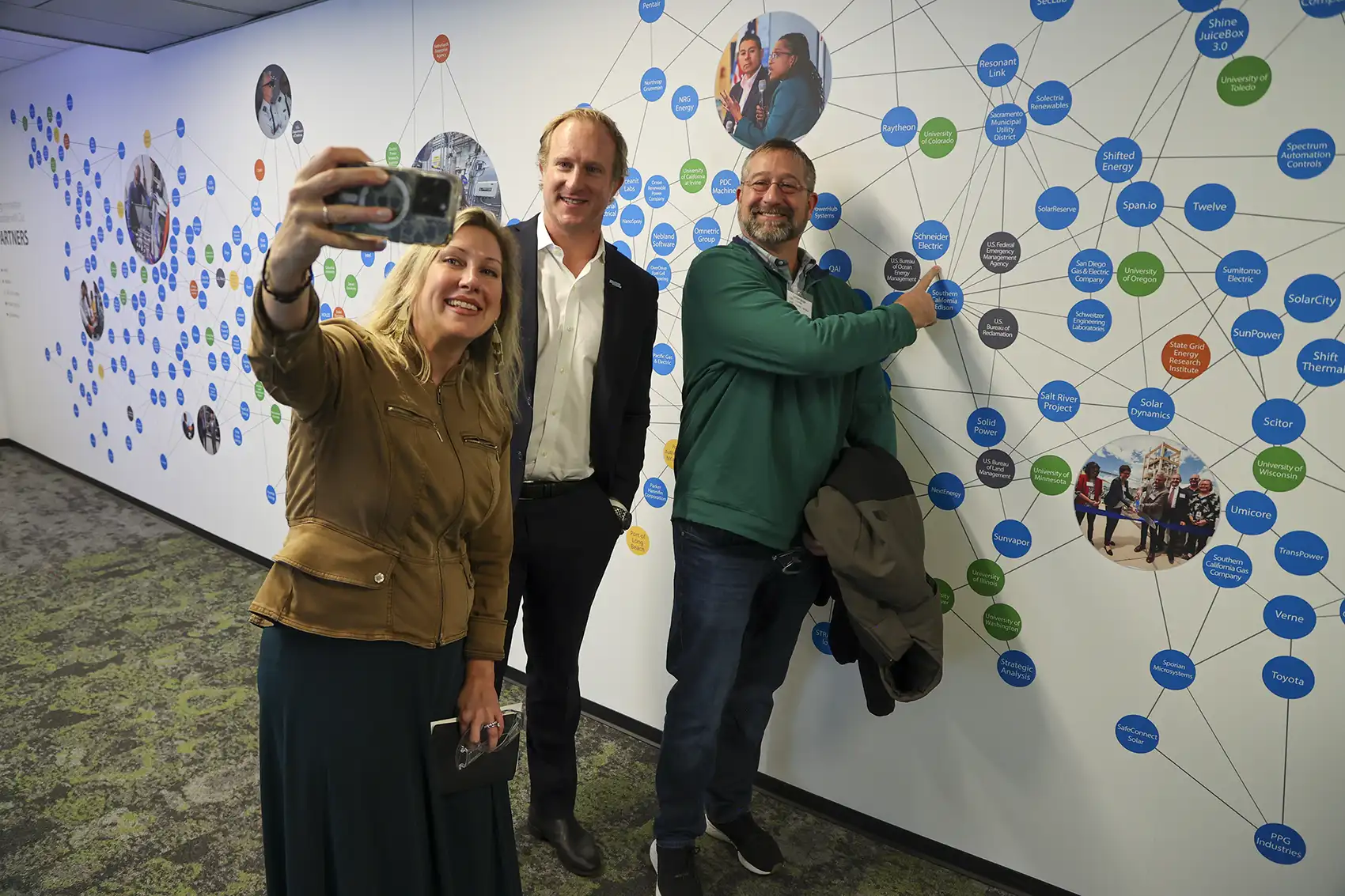
In 2023, four members of Schneider Electric’s Global Research Team were touring a facility at the National Laboratory of the Rockies (NLR), formerly known as NREL, when one looked into a warehouse-sized lab space and spotted something familiar.
“Wait, wait,” the visitor said. “We make smart panels. What are you doing with that smart panel down there?”
Smart panels are breaker panels that give homeowners more control over how their home appliances use electricity. And Schneider Electric does make them. But the 180-year-old, 160,000-employee company makes a whole lot more. In the 19th century, they built coal- and steam-powered machines to produce iron. In the 20th century and beyond, they built electrical systems, the technologies behind our modern power and digital infrastructure and the backbone of today’s economy. Now, the company is combining electric ingenuity with automation, artificial intelligence, and digital control.
“We’ve got to go faster than faster, which means bringing together all the players,” said Kent Crawford, the director of engineering at Schneider Electric.
One of those players is NLR.
NLR and Schneider Electric have been partnering to tackle energy questions for about a decade. But in the last three years, the partnership has become closer and more integrated—a boon for breakthroughs.
“A reactive model doesn’t work given how fast everything’s moving with AI and data centers,” said Ty Ferretti, a strategic partnership manager at NLR. “Schneider is seeing speed and scale. They’re seeing the value of working with us to be proactive and thorough.”
Most recently, energy experts from both organizations have been getting “proactive and thorough” on two big, complex projects: an analysis of what the U.S. energy economy could look like in 2050 and, soon after that lab tour, smart panels. Both projects—plus additional side projects on a reusable material for energy tech, data center reliability, and improved semiconductors for more efficient electronics—could all help Schneider Electric understand how to better serve their customers.
The outcomes of the two larger studies could yield big wins for Americans, including reduced energy costs and greater control over when, where, and how their electricity flows.
“At NLR, we’re all about impact,” Ferretti said. “And Schneider is such a huge company that whatever projects we do with them can be amplified on a grand scale.”
The Future of American Energy
When Schneider Electric first asked to partner with NLR, the company certainly had grand scale in mind. What, they asked, would American energy look like in 2050?
Like with many future-based questions, the answer is: It depends.
“Scenarios and energy outlooks are often too incremental,” said Vincent Petit, a senior vice president of research at Schneider. “They tend to perpetuate economic structures and miss important transformations of the economy, which have major impacts on the evolution of our energy systems.”
Energy tech follows people, and people move, change jobs, have children, and move again. Where people work and move—from big, population-dense cities to sprawling suburbs or cozy, multigenerational communities—affects what kind of energy systems they need to heat their houses, light offices (either home or high-rise), and get where they need to go.
Schneider Electric is preparing for what might come next. They are investing in technologies and systems that can adapt to America’s energy future and, as Crawford said, “position the United States for greater resilience, affordability, and competitiveness in its energy and economic systems.”
Enter the “Schneider Electric 2050 Scenarios Study.” For this sweeping project, Schneider Electric enlisted NLR experts, like Ry Horsey, to explore plausible energy futures. The joint team analyzed huge amounts of data, documented trends (Americans have been moving farther south and west, for example), and insights from experts in urban planning, manufacturing, materials science, energy systems, and infrastructure development.
One especially big factor? Jobs. “Where are those jobs going to be?” said Horsey, a research engineer in the Building Stock Modeling and Analysis group at NLR.
The answer, again, is: It depends. Increased reliance on digitization, automation, and artificial intelligence could change where Americans work—and therefore live—plus how we buy or make critical energy technologies, like semiconductors. Modern technologies could also affect which industries, from cement to steel to critical materials, grow their domestic footprints.
Horsey and colleagues from both NLR and Schneider Electric came up with two potential visions of what the energy economy could look like in 2050.
In one, Americans consolidate in compact, connected communities and, with classic American “spirited self-determination” (what Horsey defined as a “collective belief that each of us can manifest and create our own destinies”), they take charge of their rapid transformation. Communities invest in modern manufacturing trends, like automation, robotics, and finely tuned domestic supply chains. They prioritize decentralized energy systems that depend less on large (and often costly) grid upgrades. And they build new infrastructure rather than repurposing the old.
In the other vision, Americans continue to sprawl into suburbs where both people and infrastructure are more constrained. They depend more on cars and existing motorways, international goods over domestic manufacturing, and a centralized grid system that could struggle to keep up with increasing energy demand.
No matter which future Americans choose, Schneider Electric is better prepared to navigate change now that it has a trusted vision for how communities and industries—such as chemicals, mining, and more—might evolve. As a bonus, they only had to come to one multidisciplinary organization to get those insights.
As Horsey said, “The breadth of our expertise gives us an opportunity to think far more holistically about the future of the energy system.” And the future of America, too.
The Future of Smart Homes: Smart Panels
For their second big partnership project, Schneider Electric asked NLR to help analyze their smart panel—specifically its potential energy and cost savings for American consumers and utilities.
“Smart panels to me feel like the latest, most exciting thing in the smart home space,” said Bethany Sparn, a senior research engineer with NLR’s Building Technologies and Science Center.
Unlike traditional breaker systems, smart panels could give homeowners the ability to control how, when, and where their electricity flows. Say someone gets home from work in the evening. They want to charge their electric vehicle, put dinner in the oven, start a batch of laundry, and turn on the air conditioning. But their neighbors all have the same idea, and electricity prices surge.
Instead, the homeowner can avoid those surge prices—and a hefty energy bill to match—with a little extra control. Because a smart panel can automatically turn individual circuits on and off, the homeowner could program their water heater to heat water in the middle of the night, when energy prices are lowest.
“That can provide a very simple way of reducing cost,” Sparn said.
The smart panel could also help homeowners add new electric appliances or avoid exceeding their electric service rating—the maximum amount of electricity a home can safely handle at one time. If a homeowner tries to install a large new electrical appliance, like an induction stove, or exceeds their rating, their utility typically needs to install a new service line to connect new wires to the house. “That is very, very expensive,” Sparn said. It’s also time-consuming; it could take a utility more than a year to upgrade service.
Instead, a smart panel could monitor a household’s energy use and shut off designated circuits—like the one keeping the water heater running—to keep usage below the cap, saving tens of thousands of dollars. The Schneider smart panel monitors a whole home’s energy usage and controls the circuits to prevent overload.
Although smart panels can save homeowners and utilities money, they are more expensive to buy and install. So, to gain a better understanding of the long-term benefits for both homeowners and utilities, Schneider Electric came to NLR.
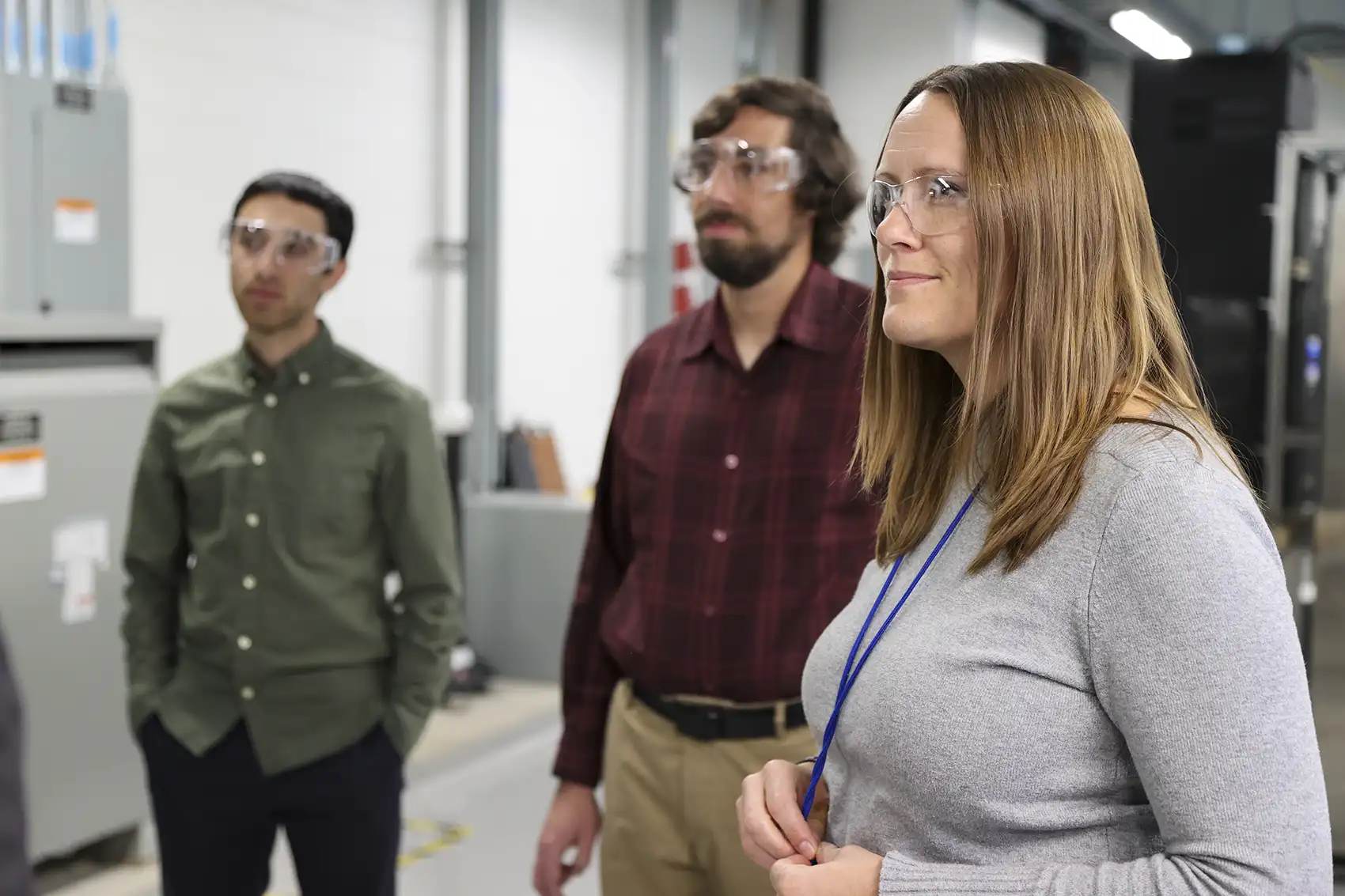
In the lab, Sparn and colleagues created a realistic replica of an average home. They installed Schneider Electric’s smart panel and are measuring the impact of different control strategies. And, with NLR’s supercomputer, they are running millions of simulations to help quantify how much money the smart panels could help consumers or utilities save over time. If utilities see large enough gains, they might be willing to offer rebates to customers who invest.
“We can play these ‘what if’ scenarios,” Sparn said. Like, what if 10% of homes in Spokane, Washington, had smart panels that could automatically shut off specific circuits? Could that help offset costs when everyone turns on their electric baseboard heaters at the same time every winter morning? Or what if 50% of homeowners in Southern California had them? Could those homes reduce their energy use even as summer heat surges and energy prices rise? “We can also play around with some controls they don’t currently have but have thought about adding,” Sparn said.
In short, NLR has the facilities, equipment, expertise, and experience to field these big energy questions—and far more. And, given its historical leaps—from coal-powered iron to electric data centers—Schneider Electric is likely to continue questioning the status quo.
The benefit of such a long-term partnership is the ability to quickly team up to explore novel ideas that could impact their company’s future as well as the country’s or the world’s.
“The impact is enormous because of how big Schneider is and how big their reach is,” Ferretti said. “And together we’re all about impact.”
“It takes us all,” Crawford said. “And we’re excited to see just how much we can accomplish with NLR’s support.”
Ready to tackle your toughest energy questions? NLR can provide the expertise, facilities, and data-driven insights to efficiently advance your technology to market. Discover how we can help.
Last Updated May 28, 2025