38 Coastal, Remote, and Island Communities To Pursue Energy Reliability via Energy Technology Innovation Partnership Project
Latest Cohort Is Program’s Biggest Yet, With Broad Geographic Representation

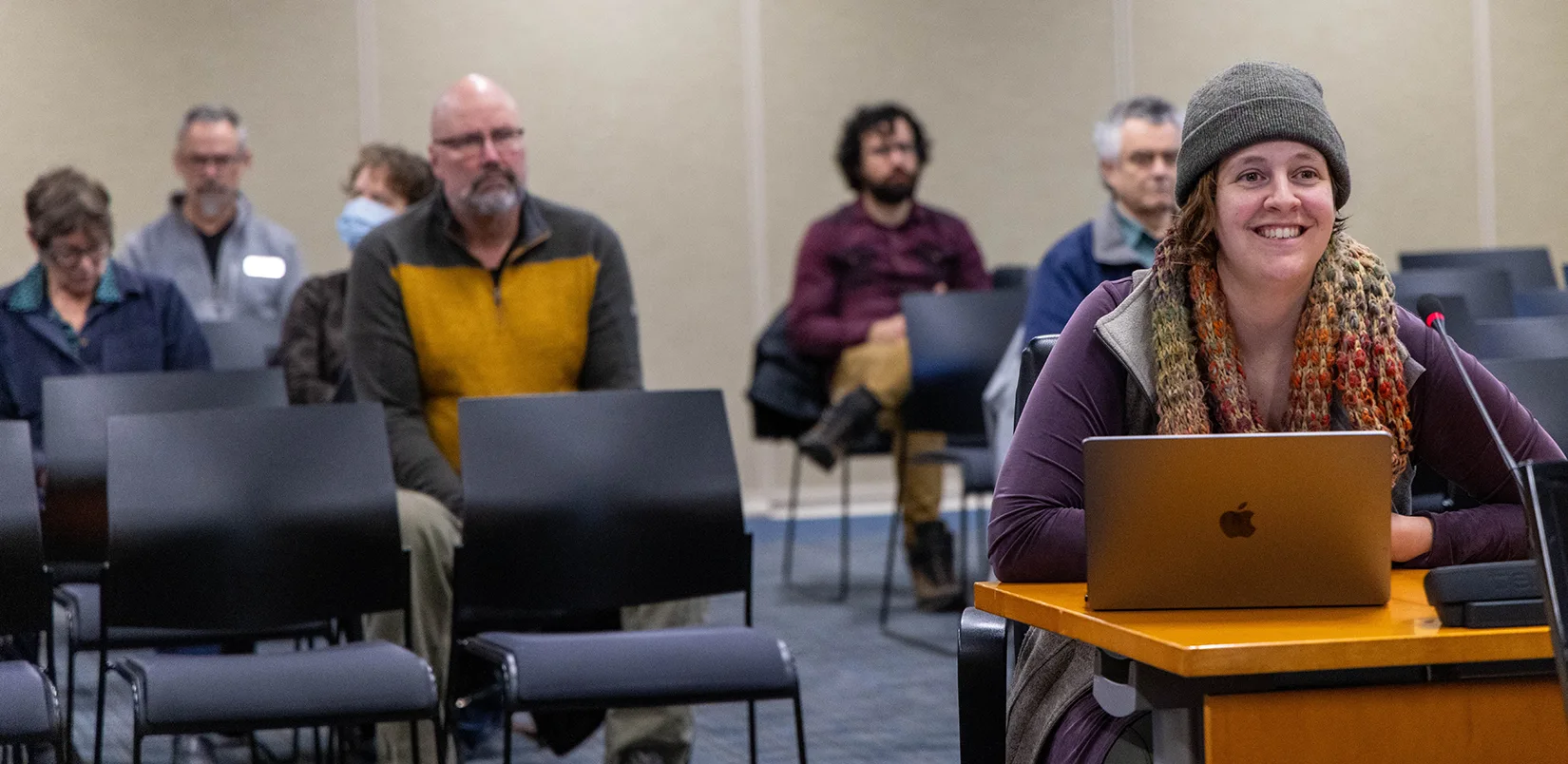
Remote and island communities face unique energy challenges—but these challenges also present unique opportunities to increase energy affordability, reliability, and security.
In their efforts to address their energy challenges, 38 coastal, remote, and island communities will receive support as part of the fifth cohort of the Energy Technology Innovation Partnership Project (ETIPP)—a U.S. Department of Energy technical assistance program led by the National Laboratory of the Rockies (NLR), formerly known as NREL.
ETIPP connects selected communities with national energy experts who provide technical analysis, modeling, and decision support to identify energy reliability and affordability solutions best suited to each community’s needs.
Several new Gulf Coast and Great Lakes communities have joined the program this year, adding to the program’s regional expansion in 2024. The communities joining ETIPP’s fifth cohort strengthen the program’s presence across these regions, as well as in Alaska, the Caribbean territories, Hawaii and the Pacific territories, the Northeastern Seaboard, the Pacific Northwest, and the Southeastern Seaboard.
“We’re fortunate to be able to expand the program to so many communities this year,” said NLR’s Tessa Greco, ETIPP program manager. “The growth of the program showcases its value to coastal, remote, and island communities, while interest in the program highlights the energy challenges so many communities face.”
Proposed projects for Cohort 5 aim to strengthen energy systems against extreme weather events, explore options for new local generation, design microgrids to protect against outages, explore energy efficiency options, and more.
Communities in the early stages of energy planning will spend 4–8 months in ETIPP developing a strategic energy plan that clearly defines their energy goals and objectives. Those joining ETIPP with an existing energy plan or well-defined project will begin a 12–24-month process to analyze and validate specific energy solutions.
A team of national laboratory researchers and regional partner organizations will support ETIPP communities along the path, no matter which track they take. Energy experts at four national laboratories—Lawrence Berkeley National Laboratory, the National Laboratory of the Rockies, Pacific Northwest National Laboratory, and Sandia National Laboratories—work with communities to find solutions tailored to local energy challenges. ETIPP communities also receive support from regional partners, who build connections between community members and the national laboratory complex and have the local knowledge to ensure that projects are meeting community needs.
In ETIPP's first four cohorts, 57 communities analyzed reliable energy solutions, such as assessing localized energy generation and storage options, optimizing existing energy systems, or analyzing energy efficiency and weatherization options for existing infrastructure.
Learn more about ETIPP’s Cohort 5 communities and their planned projects below.
ETIPP’s Fifth Cohort of Communities
Alaska Region
Adak, Alaska
The city of Adak, the southernmost community in Alaska, is strategically positioned as a national defense site. ETIPP strategic energy planning will help Adak evaluate local, cost-effective options that improve the reliability, affordability, and security of their energy system as the community experiences economic investment, including efforts to reopen a naval base.
Alaska Longline Fishermen’s Association
The Sitka-based Alaska Longline Fishermen’s Association (ALFA) represents the commercial seafood fishing industry, a key economic cornerstone for Southeast Alaska. Fishing is energy-intensive and often relies on costly imported diesel fuel. ETIPP will collaborate with ALFA to evaluate energy system improvements and innovative technology options to increase energy efficiency, reduce energy costs, and improve the reliability of ALFA’s operations.
Bristol Bay, Alaska
Bristol Bay’s reliance on imported diesel fuel makes the region vulnerable to energy instability, and high-profile fuel leaks near Bristol Bay have adversely affected the sockeye salmon industry, which is key to the region’s economy. ETIPP technical assistance will help the region evaluate microgrid options that integrate local energy generation into existing power infrastructure to reduce the region’s reliance on expensive diesel imports and improve the reliability and security of its energy system.
Chilkat Indian Village, Klukwan, Alaska
The Chilkat Indian Village of Klukwan aims to create a strategic energy plan that identifies affordable energy solutions and provides a foundation for the long-term reliability and security of their energy system. ETIPP’s energy planning process will help the community assess energy use in both critical infrastructure and homes, identify opportunities to improve energy efficiency, and evaluate energy generation and storage options that improve safety, reduce costs, and align with the Tribe’s traditional values.
Kotlik, Alaska
Through ETIPP strategic energy planning, Kotlik identified their energy goals as reducing energy costs, improving weatherization and energy efficiency, and offering supportive community education and training. They will continue building on this work by planning and establishing an independent power producer in the community, assessing local generation potential at key locations, and planning for improvements to grid infrastructure and storage.
Kotzebue, Alaska
Kotzebue has energy-inefficient housing and imports fuel for both heating and electricity, resulting in some of the highest home energy costs in Alaska. The community developed a strategic energy plan through ETIPP and will build on it to evaluate opportunities for lowering energy costs, expanding the independent power producer model, incorporating natural gas generation, improving bulk fuel storage, implementing weatherization strategies, and creating workforce training for residents.
Mary’s Igloo Native Corporation, Alaska
The Tribal community of Mary’s Igloo of Alaska is seeking to reestablish their traditional village at Mary’s Igloo, where there are available geothermal resources. ETIPP will support Mary’s Igloo Native Corporation by helping them evaluate their energy needs; establish a baseline energy assessment, including geothermal resources characterization; map energy infrastructure siting; and obtain energy planning resources for the community to ensure a reliable, secure energy system.
Newtok, Alaska
Newtok, an Alaska Native village, will leverage ETIPP expertise to update and expand its strategic energy plan to improve the reliability and affordability of its energy system. The updated plan will help Newtok make data-driven decisions around local, cost-effective options for energy generation, infrastructure upgrades, residential energy use and management, and strategies for maintaining local energy systems.
Scammon Bay, Alaska
Through ETIPP’s strategic energy planning process, Scammon Bay identified its energy goals, including making electricity more affordable, increasing available localized energy generation to improve reliability, and reducing electricity use. Work will continue to evaluate local, community-owned generation resources that reduce costs and increase energy system efficiency and reliability. The community will also plan for workforce development programs to meet those goals.
Southeast Conference, Alaska
The Southeast Conference of Alaska comprises 35 communities with 19 Tribes among them, and a number of communities in the region have relied on hydropower for many years. Technical assistance from ETIPP will help the region improve its integrated resource plan, identify cost-effective opportunities for grid modernization, engage in community-driven resource planning, optimize supply and demand, and identify paths for regional alignment on energy planning to improve the reliability and security of Southeast Alaska’s energy system.
Caribbean Territories Region
La Margarita, Salinas, Puerto Rico
La Margarita, a coastal community in Salinas, Puerto Rico, relies on expensive imported fuels and an unreliable, low-capacity local grid for electricity, leading to high energy costs and frequent outages for an already economically stressed community. Previous ETIPP technical support evaluated the feasibility of a microgrid to provide reliable power during times of regular and high electricity demand. The community will build on successful project outcomes to further analyze integrating existing distributed energy resources into a network, adding redundancy to both the proposed microgrid and the local energy grid, and gathering data to improve monitoring, reporting, and control across energy assets for improved reliability and security.
Isabela, Puerto Rico
The municipality of Isabela is a coastal community in northwest Puerto Rico with mountainous terrain and a dispersed population, factors that complicate energy infrastructure deployment and maintenance and make Isabela vulnerable to outages that can last months and put critical needs at risk. ETIPP’s strategic energy planning process will help Isabela assess current energy infrastructure, map critical facilities that are vulnerable to outages, and identify options for local energy generation to complement Puerto Rico’s long-term centralization efforts.
Playa de Ponce, Puerto Rico
Through the ETIPP strategic energy planning process, Playa de Ponce identified local, cost-effective solutions to strengthen energy security, enhance safety, and ensure reliable access to electricity. Although the community regularly experiences water and power outages, the area also has a significant number of abandoned brownfields that could be repurposed to address these challenges. Collaboration with Playa de Ponce will continue in order to evaluate the potential for local energy generation on brownfield sites to provide consistent power for nighttime street lighting.
Great Lakes Region
Benton Harbor, Michigan
Benton Harbor, Michigan, is a small community on Lake Michigan that faces challenges associated with aging energy infrastructure and experiences frequent outages. The community has a federal poverty rate of 43% and falls in the 95th percentile nationally for residential energy cost. ETIPP strategic energy planning will help Benton Harbor evaluate local, cost-effective energy options to lower energy bills, upgrade infrastructure, and boost energy efficiency for a more affordable, reliable energy system.
Gary, Indiana
Because of its proximity to Lake Michigan, Gary, Indiana, experiences increased flooding risks from heavy precipitation and storm surges that damage energy infrastructure and leave the community at risk. Gary received strategic energy planning support from ETIPP to conduct a baseline assessment of energy usage and needs at critical city buildings and identify options for on-site generation to provide essential community services during outages. Building on this project, Gary will leverage ETIPP technical expertise to further analyze on-site generation feasibility at several critical facilities, model energy efficiency scenarios and retrofits, and collaborate with the local utility to identify advanced metering strategies to more efficiently detect and address outages.
Grand Marais, Minnesota
As the seat of Cook County, Grand Marais, Minnesota, provides essential services and commerce for the isolated and sparsely populated county. However, its reliance on a single transmission line makes the community vulnerable to energy disruptions. ETIPP will help Grand Marais evaluate options that reduce load stress on its current system, which is nearing capacity, to improve the system’s reliability and security.
Lac Vieux Desert Band of Lake Superior Chippewa Indians, Watersmeet, Michigan
The Lac Vieux Desert Band of Lake Superior Chippewa Tribe in Watersmeet, Michigan, experiences energy reliability challenges exacerbated by aging buildings and infrastructure. ETIPP will perform modeling and analysis on microgrid and battery storage feasibility to add redundancy and improve the reliability of the Tribe’s energy system.
Menominee Indian Tribe of Wisconsin
The Menominee Tribe of Wisconsin resides on a remote, 234,355-acre reservation with aging infrastructure. ETIPP will evaluate options for integrating local energy generation into existing infrastructure for a hybrid microgrid system, creating redundancy for more reliable and secure energy for the Tribe. Additional support will assess distribution system capacity, provide system modeling and financial analysis for microgrid and biomass projects, and explore a market analysis for revenue generation from energy assets.
Gulf Coast Region
Cedar Key, Florida
The city of Cedar Key, Florida, will leverage ETIPP expertise to evaluate local, cost-effective options for enhancing the reliability and security of its energy system, focusing on maintaining critical services, protecting public safety, and supporting economic continuity. Strategic energy planning will help Cedar Key assess its energy infrastructure; identify opportunities for improving energy system durability during disruptions; analyze the cost, feasibility, and performance of different solutions; and guide future decision-making around infrastructure upgrades and investment priorities.
St. Vincent’s House, Galveston, Texas
Galveston’s isolation presents challenges for energy delivery and maintenance. ETIPP will collaborate with St. Vincent’s House to conduct a vulnerability and risk assessment of Galveston’s grid and transmission lines, evaluate local cost-effective options for on-site energy generation at key community facilities to maintain critical services for residents, assess options for reducing energy costs through building efficiency, and develop energy protocols to ensure continuation of service during power disruptions.
Key West, Florida
Key West, Florida’s southernmost point, is a low-lying island situated at the end of the utility line that has high energy prices, a vulnerable electricity distribution system, and energy-inefficient buildings, resulting in a significant burden for residents. Key West received strategic energy planning support through ETIPP to conduct an energy baseline assessment and identify cost-effective opportunities for energy efficiency and local energy generation to both reduce residents’ electricity bills and ensure safety during prolonged outages. Continued work will focus on energy efficiency strategies, localized generation options, and critical energy-water system upgrades to reduce costs and improve the reliability of the power system.
Sanibel Island, Florida
ETIPP will help Sanibel Island, Florida, build on ongoing energy system analyses to develop a strategic energy plan. This plan will evaluate local, cost-effective options for improving the security and reliability of its energy system, including strategies for reducing the risk of power outages, protecting its electrical grid, and identifying opportunities for energy efficiency. Through ETIPP’s energy planning process, Sanibel Island aims to better understand pathways to improve energy reliability and use outcomes to inform decision-making and investments toward a reliable and secure energy future.
Hawaii and Pacific Territories Region
American Samoa, including Tutuila and Manua Islands
The American Samoa Department of Homeland Security seeks support to reduce downtime and maintain the capabilities of critical emergency operations centers and communication towers during natural disaster events. ETIPP will help the department analyze outage frequency, evaluate on-site energy generation and storage options, and provide guidance for integrating on-site generation with existing generators to provide redundancy, reliability, and security during outages.
Hawaii County, Hawaii
In the event of prolonged power disruptions, the county of Hawaii’s Department of Water Supply cannot provide potable water, so the department seeks paths to energy reliability to strengthen the county’s water security. ETIPP will help the county analyze the energy use and vulnerabilities of its drinking water system and assess cost-effective solutions to improve its reliability, security, and efficiency.
Hauula and Punaluu, Hawaii
Hauula and Punaluu are geographically isolated, meaning that outages are frequent, as power travels long distances to reach the communities through lines that are vulnerable to environmental damage. ETIPP will support Hauula and Punaluu in evaluating the feasibility and capacity of on-site energy generation at key facilities to improve the reliability and security of their isolated power system and ensure that critical services continue for community members during outages.
Wahiawa and Whitmore Villages, Oahu, Hawaii
Wahiawa and Whitmore villages, which are remote communities on Oahu, are interested in identifying local, cost-effective energy generation and storage options to reduce costs, including from hydropower and pumped hydropower storage. ETIPP technical assistance will provide hydrologic resource modeling, conceptual microgrid designs, and implementation strategies to improve the reliability and security of Wahiawa’s and Whitmore’s energy systems.
Waianae, Hawaii
Residents in the Waianae region of Hawaii pay approximately three times the average cost of electricity in the United States and rely on an imported fuel supply. Through ETIPP, Waianae developed a strategic energy plan to identify potential solutions to support residents during emergencies and improve the reliability and affordability of their energy system. The program will continue supporting Waianae’s goals for community-level reliability by evaluating localized generation options.
Northeastern Seaboard Region
Belfast, Maine
As the seat of Waldo County, Belfast serves as an essential economic center in midcoast Maine, but most of the city’s electricity is transmitted through a single high-voltage line that is increasingly threatened by severe storms. ETIPP strategic energy planning will help Belfast better understand its baseline electricity supply and demand, assess its energy infrastructure, explore opportunities for energy storage, and develop an action plan to ensure a more reliable, efficient, and affordable energy system.
Cranberry Isles, Maine
Cranberry Isles is made up of five separate islands, all reliant on an underwater cable for electricity. ETIPP technical expertise will help Cranberry Isles understand microgrid feasibility and options for integrating additional local energy generation to improve energy system redundancy and reliability, as well as energy efficiency strategies to reduce costs and load.
Islesboro, Maine
The small island of Islesboro depends on an aging underwater cable for electricity from mainland Maine, and service is frequently disrupted. The town requested ETIPP technical assistance to develop de-risked designs and implementation strategies for an islandwide microgrid, evaluate local energy generation options, develop grid upgrade solutions, and integrate these efforts into an island energy plan.
Wiscasset, Maine
The small, rural community of Wiscasset, Maine, has experienced nearly 400 power outages since January 2020. Participating in strategic energy planning with ETIPP will help Wiscasset identify energy system vulnerabilities and opportunities to enhance reliability, explore backup generation and storage options for an emergency shelter, develop energy-efficient designs for planned critical infrastructure upgrades, provide education on weatherization and energy efficiency in homes, and position Wiscasset as a model for small-town energy innovation as it improves energy reliability and security.
Pacific Northwest Region
Confederated Tribes and Bands of the Yakama Nation, Washington
Strengthening the reliability of the local energy distribution system and reducing energy costs are priorities for the Yakama Nation. Engaging in strategic energy planning through ETIPP will help the Tribes evaluate local, cost-effective options to upgrade their energy infrastructure and build a roadmap for improving their energy system’s affordability, reliability, and security.
Hood River, Oregon
Hood River County, located in the heart of the Columbia River Gorge National Scenic Area, has recently experienced severe summer heat domes and wildfire risk, leading to power outages and driving up energy costs. ETIPP will support Hood River’s goal of energy reliability and affordability through an economic impact analysis of various power disruption scenarios, a microgrid feasibility study, and a loan-fund evaluation for pursuing their energy plan.
Port Orford, Oregon
Port Orford is a small fishing port along Oregon’s southern coast, and the port is the community’s primary economic driver. Due to its high elevation, the port depends on electricity to power a particular boat slip and crane that raises and lowers boats to and from the dock. Storms often result in power outages at the port, halting operations and leaving fishermen with no safe way to return to shore. Port Orford previously received strategic energy planning support from ETIPP. Building on successful outcomes from the energy planning process, ETIPP will support a design study for backup power options, evaluate and address safety issues, perform an efficiency and vessel electrification study for the boat slip, and explore desalination as an alternative source of water.
Swinomish Indian Tribal Community, Washington
The Swinomish Tribe participated in strategic energy planning through ETIPP to develop actionable steps toward their energy goals, engage and educate the community, and create workforce development opportunities. The work will continue with a siting and feasibility study of localized generation and energy storage technologies, an evaluation of potential fishing vessel electrification opportunities, and an assessment of energy efficiency and savings opportunities for Tribal community members to reduce energy costs and improve the reliability and security of their energy system.
Shoalwater Bay Indian Reservation, Tokeland, Washington
As the Shoalwater Bay Indian Tribe prepares to relocate its emergency service facilities, administrative offices, and housing away from a tsunami inundation zone to higher ground, they are simultaneously working to develop an energy plan that mitigates hazards and supports long-term growth. ETIPP strategic energy planning will help the Tribe assess risk to current and future energy assets, explore local generation and storage potential, and engage community members to improve the reliability and security of their energy system.
Southeastern Seaboard Region
Brunswick, Georgia
Brunswick, Georgia, residents face economic hardships exacerbated by high energy costs, so the city is prioritizing coastal energy reliability, stormwater management, and infrastructure improvements. To support the community’s goals, ETIPP will help evaluate options for on-site energy generation to reduce energy costs and improve energy system reliability.
Tangier Island, Virginia
Tangier Island, Virginia, experiences significant land loss, erosion, flooding, and saltwater intrusion, all of which negatively affect the Chesapeake Bay island’s energy infrastructure and water supply. Through ETIPP, Tangier Island received strategic energy planning support to establish an energy baseline and identify key energy infrastructure and efficiency needs. ETIPP will continue supporting the island to identify and implement weatherization strategies for inefficient buildings and the critical wastewater treatment plant, resolve residential water leaks, and reduce energy use and costs at the island’s highest-consumption facilities.
ETIPP is a community-led technical support program for coastal, remote, and island communities to access unique solutions and increase energy resilience. By uniting federal agencies, national laboratories, regional organizations, and community stakeholders, ETIPP provides tailored technical support to help communities achieve affordable, reliable solutions to their energy system challenges. This collaborative model leverages the combined expertise and resources of its partners to deliver comprehensive, practical solutions that align with local needs.
To learn more about program eligibility and the application process, visit NLR’s ETIPP website or contact [email protected].
Last Updated May 28, 2025