
NLR and Blip Energy Collaborate on Smart Home Battery System
Drop-In Solution Benefits From Laboratory Expertise Through Wells Fargo Innovation Incubator To Cut Electric Bills and Strengthen Grid Reliability

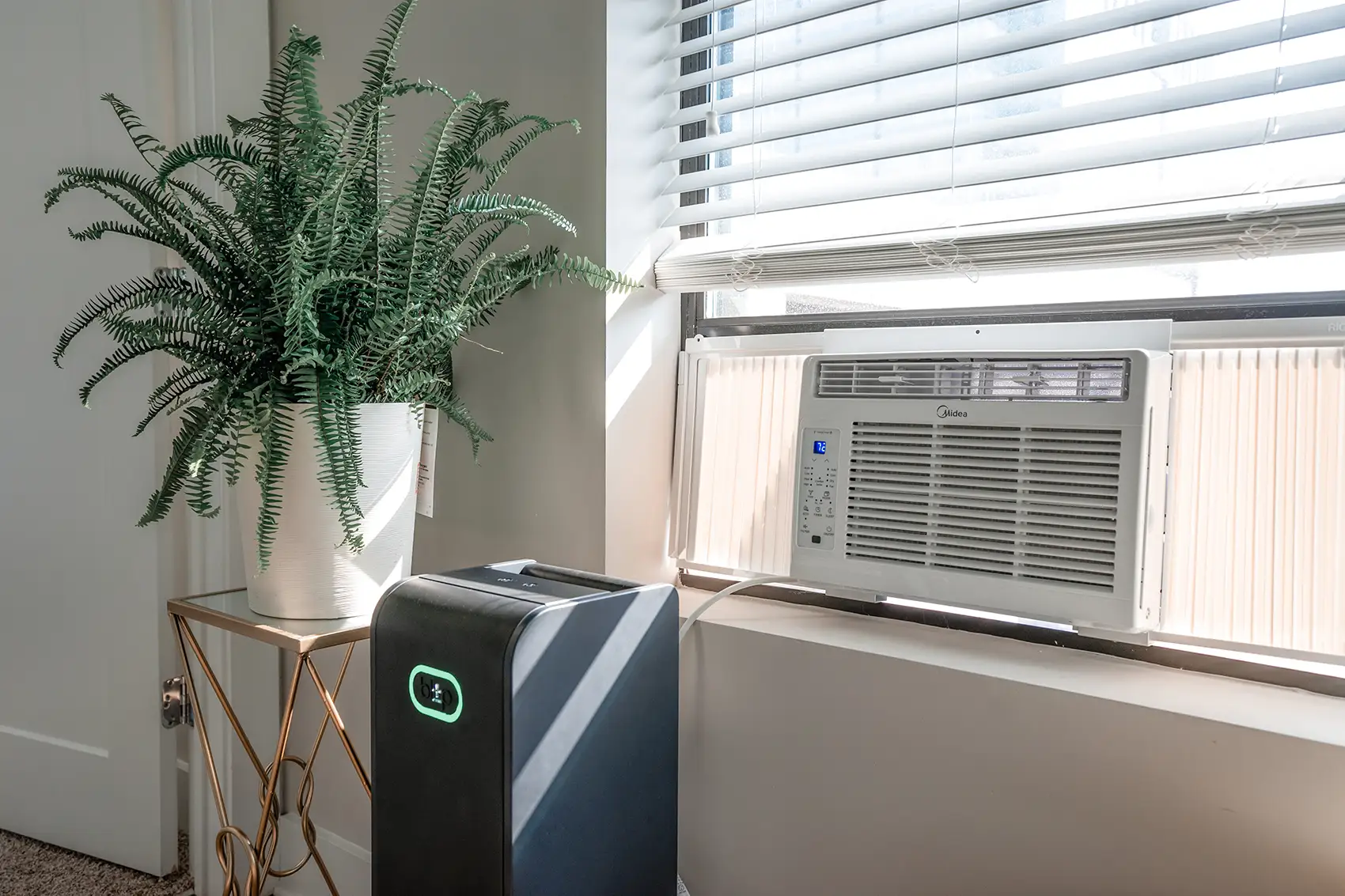
A smart home battery and energy management platform by Chicago startup Blip Energy is advancing through the 14th cohort of the Wells Fargo Innovation Incubator (IN2), launched in November 2024 and based at the National Laboratory of the Rockies (NLR) to give early-stage companies access to the laboratory’s technical expertise, capabilities, and facilities.
Blip was chosen alongside Canada’s Evercloak and Massachusetts’ Transaera, with each company focused on the cohort’s theme of developing scalable, drop-in solutions that maximize energy efficiency for the built environment. Through IN2, Blip received $200,000 in nondilutive funding from Wells Fargo & Company in the form of NLR technical assistance.
At the center of this partnership is NLR’s Ravi Kishore, a mechanical engineer on the building technologies team, who is helping Blip analyze the performance and market potential of its first product offering, blipOne, through rigorous techno-economic assessments grounded in the national laboratory’s building energy and grid systems research.
Supporting the Grid
More compact than a carry-on suitcase, blipOne is a smart battery designed to mitigate peak energy demand, optimize energy costs for users, and reduce operating costs for utilities. As a self-install, behind-the-meter product, it sits beside the highest load appliances in a home, such as a window air conditioner or refrigerator, and plugs into a standard wall outlet to shift electricity use during peak hours.
NLR’s evaluation will examine how blipOne units perform across various building types and geographic regions, with Kishore conducting case studies to identify where the technology delivers the greatest benefit.
“Blip units charge when electricity is cheapest and automatically discharge during peak hours—typically in the early evening—helping users save money while easing strain on the grid,” said Chance Cobb, cofounder and CEO of Blip.
With energy arbitrage, Blip estimates its battery could save end users—currently homeowners and renters—up to $300 annually on electric bills. With NLR’s support, the company is examining how those savings scale when devices are deployed not just in individual residences but also across multifamily buildings and commercial properties.
“The value proposition would be less pronounced if Blip Energy was focused only on single-family residential homes,” Kishore said. “Instead, they want to include the commercial buildings market, where the pattern is more predictable. If you combine multiple rooms, the overall impact is much more significant than one single-family home.”

Distributed fleets of Blip units could reduce peak demand for commercial or apartment building owners who can then lower utility costs, pass savings on to tenants, and boost their property’s value and appeal. Especially in older buildings and dense urban areas, which are hardest to engage and retrofit, dynamic control of consumer-side demand is helpful for an overworked grid and the operators that manage it.
“The challenge is that energy demand is rising faster than grid expansion,” Cobb said. “Instead of building costly new generation, utilities are now turning to demand-side solutions: flexible tools, like blipOne, that help lower and shift energy use to balance the grid more efficiently.”
Blip aims to work alongside key customers and partners, including utilities, grid operators, demand aggregators, and building owners, to position its product as more than a consumer smart home gadget: It is a virtual power plant of connected devices, capable of relieving stress from the local grid when demand is higher than supply.
With Kishore's help on the calculations, the company’s next phase will quantify the value of blipOne’s functionality and identify which customers are best suited for its deployment—key steps for scaling their prototype into a commercial product.
Scope of IN2
Upon entering the IN2 program, Blip was connected with Kishore as principal investigator, given his background in building energy management, energy storage, and early-stage research—areas that align directly with Blip’s next steps for commercialization.
“Our goal through the IN2 project is to quantify the benefits of the technology both in numbers and dollars: how long these batteries can power devices and what the overall savings will be,” Kishore said. “We want to understand those benefits across different settings: a small, midsize, or large hotel; a multifamily apartment building; or even a hospital. The impact can vary depending on the building type, number of rooms, devices being powered, and the climate or city.”
As part of the analysis, the NLR team will model how blipOne batteries perform in real buildings, considering factors like weather, occupancy, and utility rates by region. In New York, for example, they are analyzing time-of-use rates and utility programs for multiuse buildings and hotels to estimate bill savings from shifting energy use.
NLR will also measure the performance of the battery, such as how efficiently it charges and discharges, how quickly it responds, and how much energy it can store and return over time. The goal is a battery that provides up to 2.5 kilowatt-hours of energy when it is needed most, plus backup power in case of outages.
This techno-economic analysis provides a third-party, science-based backbone that will show where Blip’s technology delivers the greatest impact, while flagging potential issues early to guide strategic decisions for its launch. Cobb said Kishore’s “thought leadership” has been instrumental in helping move Blip from technology to application.
“My expertise in grid systems isn’t as deep in the specific areas where the NLR team excels,” Cobb said. “Ravi’s insights have challenged some of our assumptions and been invaluable in helping us clarify where Blip delivers the most value and how we structure incentives across key customer groups in the value chain.”
NLR’s validation also strengthens market confidence. As the company prepares for UL certification—the global stamp of approval for electronics safety and quality—Cobb said the laboratory’s expertise and the IN2 program’s support have been indispensable
The laboratory, he said, “is a highly respected thought leader in the energy space,” an unbiased third party that “brings tremendous credibility to our work.”
That credibility matters. For every $1 invested by Wells Fargo, IN2 portfolio companies raise more than $121 in follow-on funding, underscoring the impact of NLR-guided early-stage support and IN2’s role in helping energy innovations reach the market.
For more information about the Wells Fargo Innovation Incubator, visit IN2ecosystem.com.
Last Updated May 28, 2025