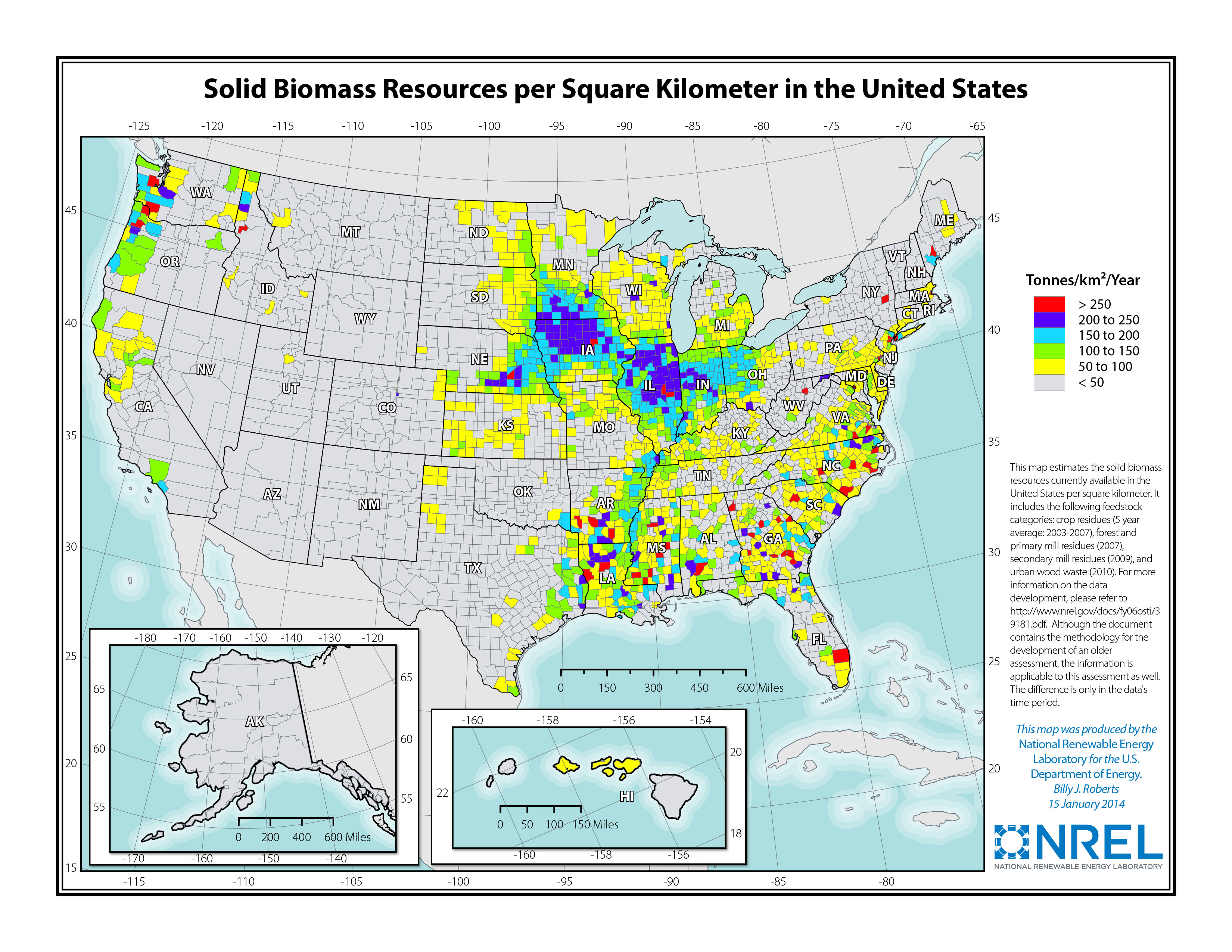
Biomass Maps
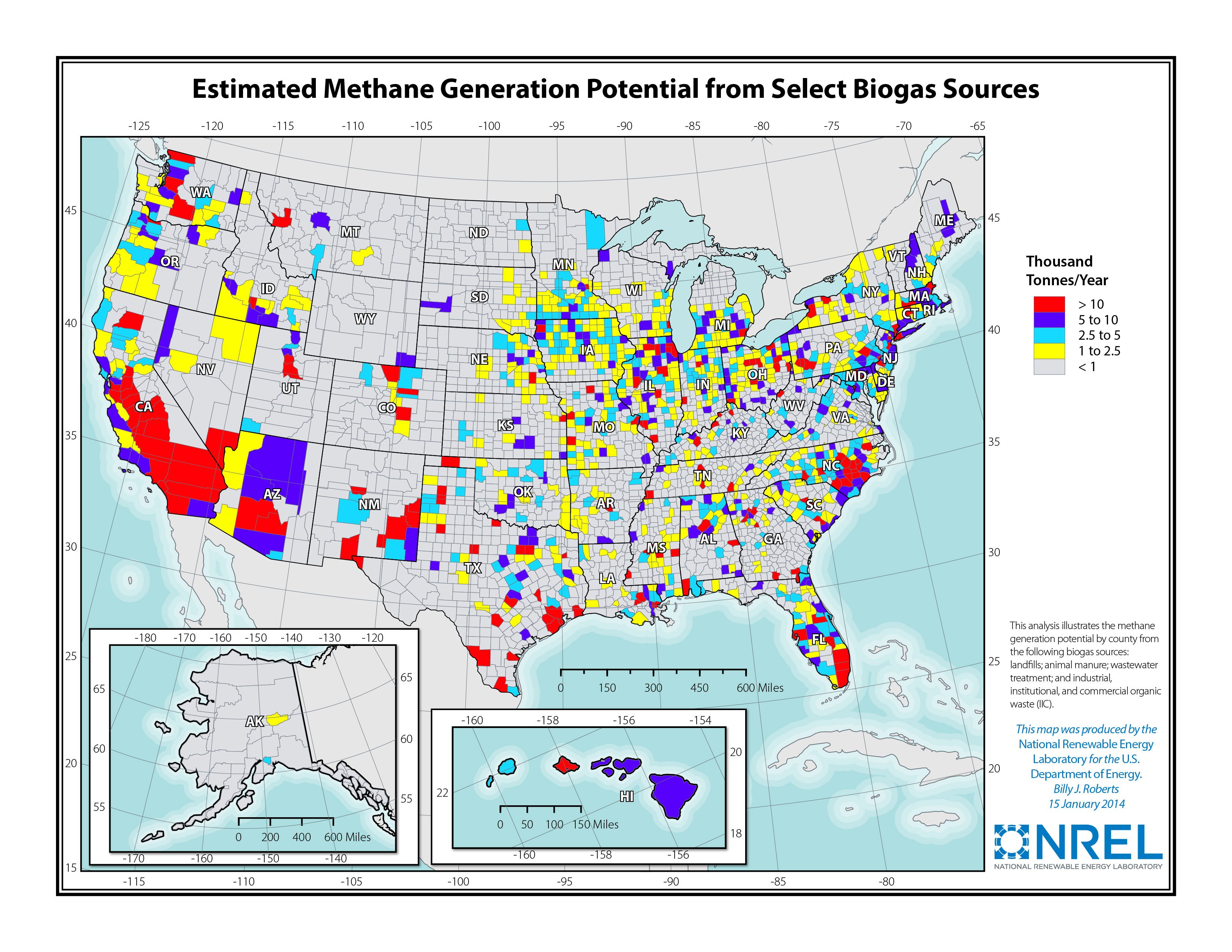
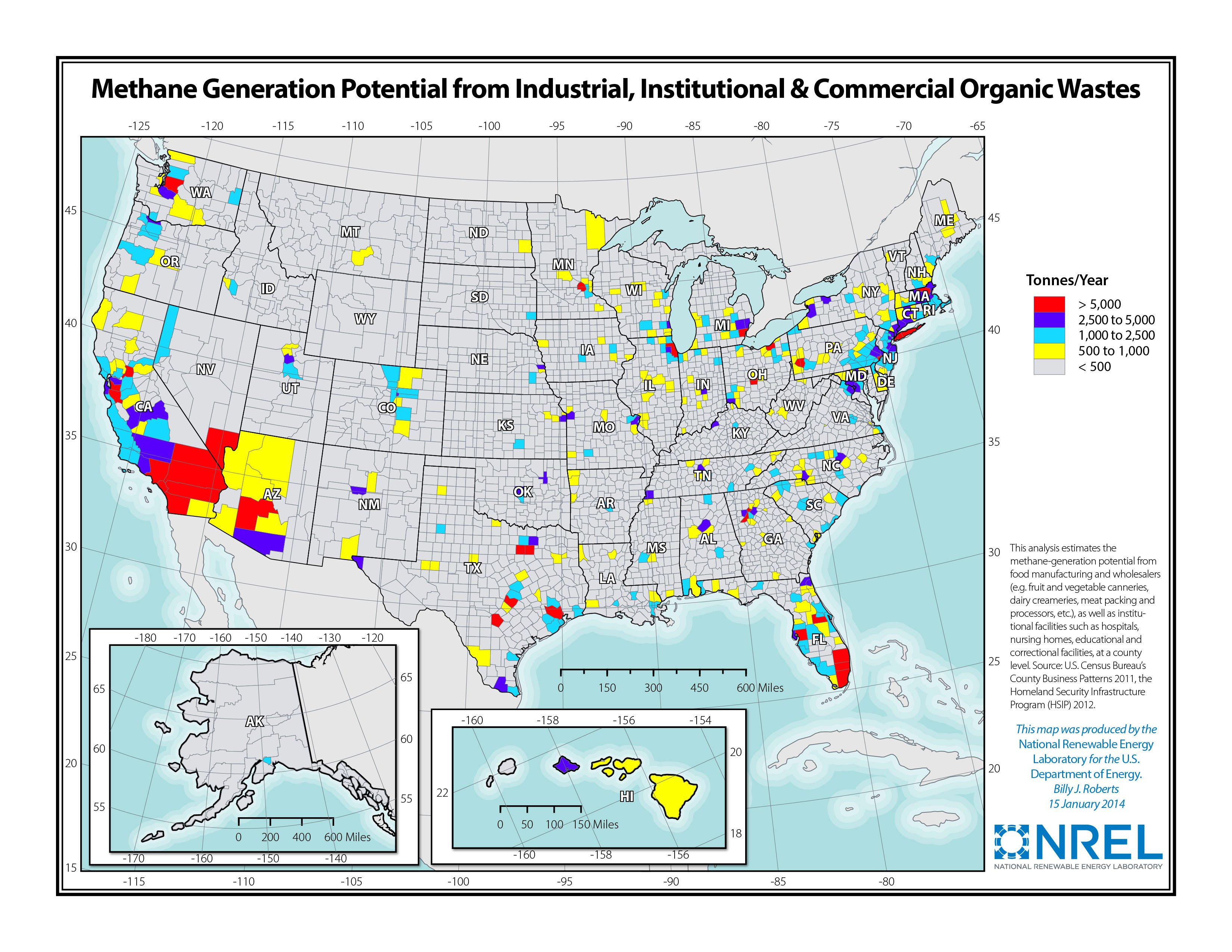
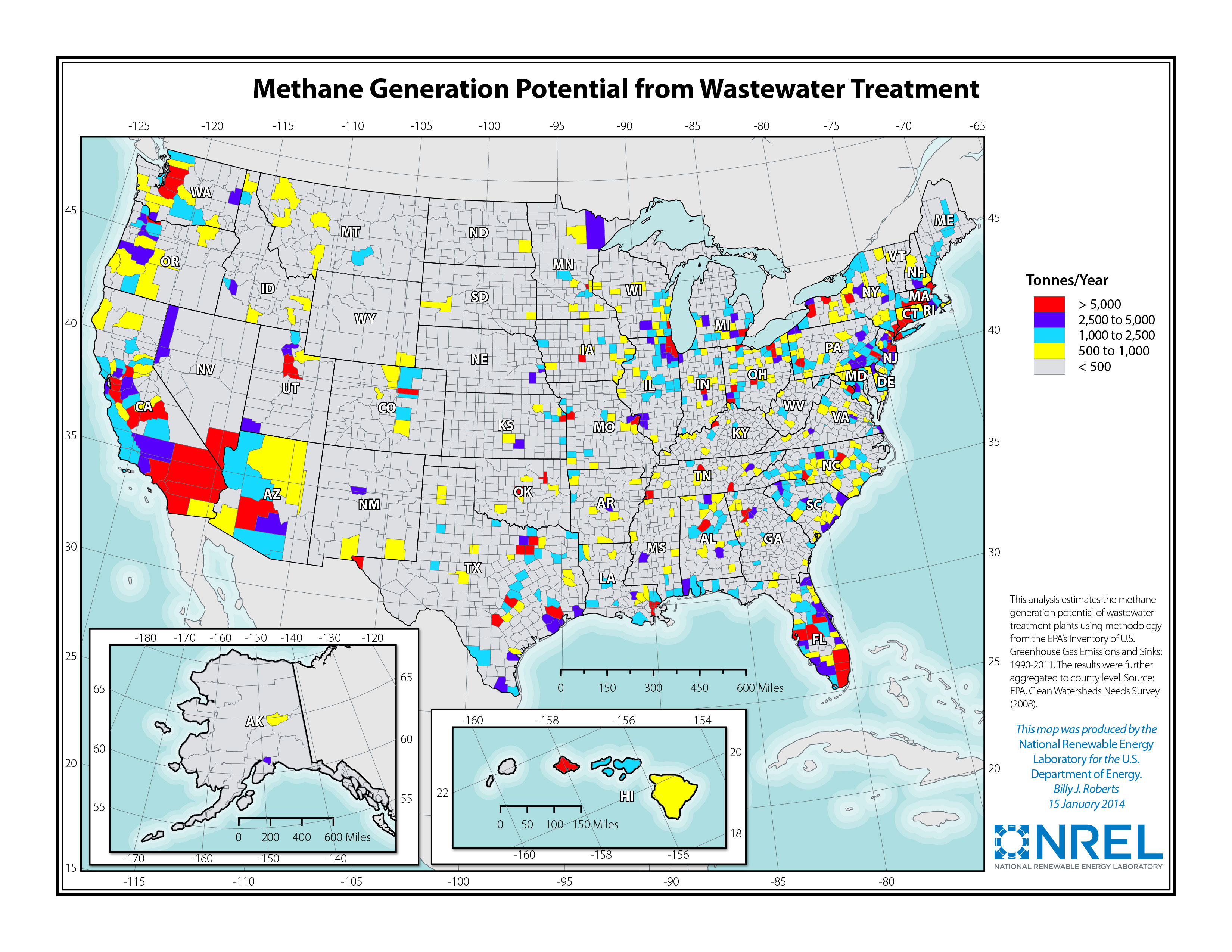
These maps estimate the technical biomass resources available in the United States by county. Biomass feedstock data are analyzed both statistically and graphically utilizing geographic information systems (GIS). The following feedstock categories are considered for this study: crop residues, methane emissions from manure management, methane emissions from landfills and wastewater treatment facilities, forest residues, primary and secondary mill residues, urban wood waste, and dedicated energy crops. If you have difficulty accessing these maps because of a disability, please contact the Webmaster.
- Biomass Resources Available in the United States
Static Map (JPG 129 KB) - Biomass Resources Available per Square Kilometer in the United States
Static Map (JPG 126 KB) - Biomass Resources Available per Person in the United States
Static Map (JPG 128 KB)
Analysis Methodology
Crop residues
The following crops were included in this analysis: corn, wheat, soybeans, cotton, sorghum, barley, oats, rice, rye, canola, dry edible beans, dry edible peas, peanuts, potatoes, safflower, sunflower, sugarcane, and flaxseed. The quantities of crop residues that can be available in each county are estimated using total grain production, crop to residue ratio, moisture content, and taking into consideration the amount of residue left on the field for soil protection, grazing, and other agricultural activities. Source: USDA, National Agricultural Statistics Service, 2002 data.
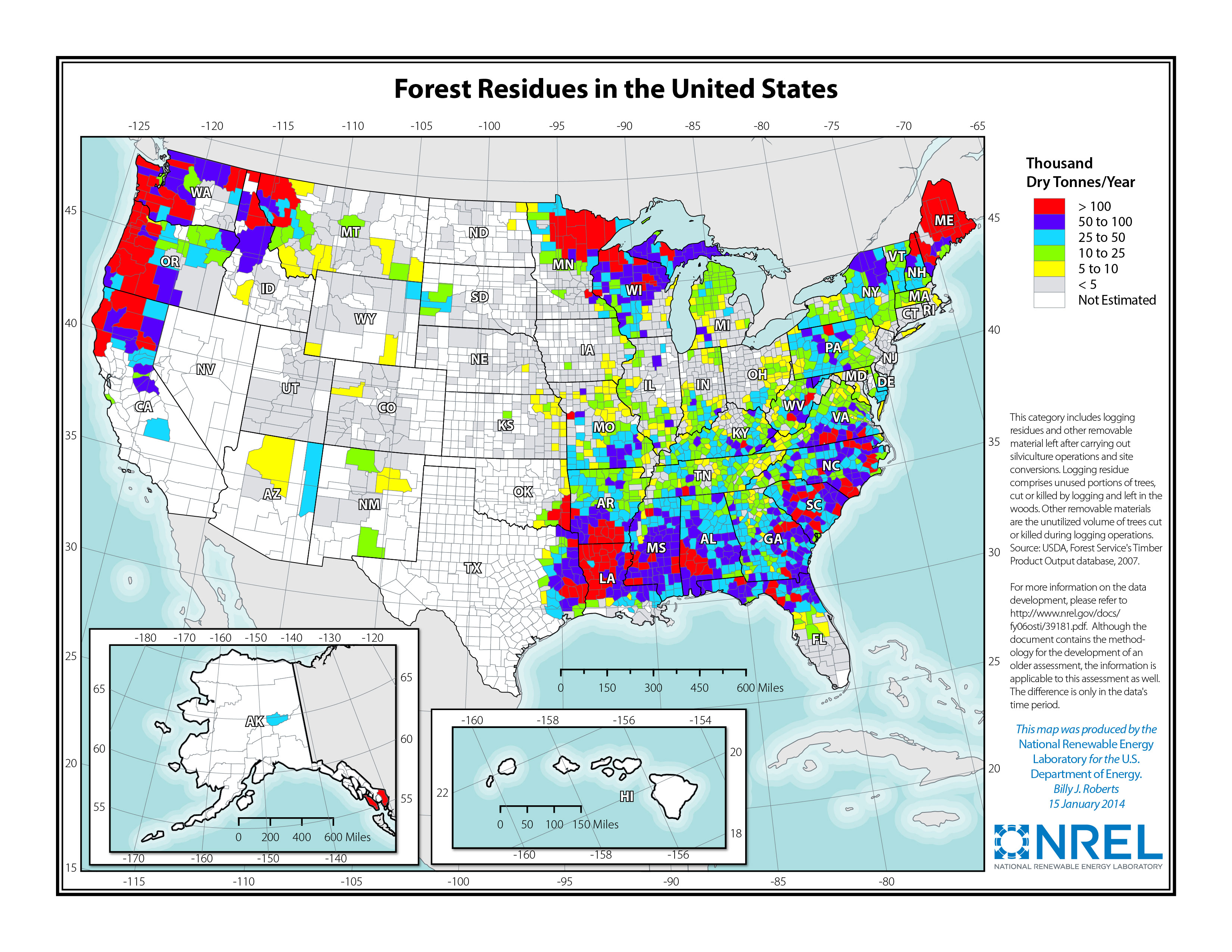
Forest residues
Forest residues are logging residues and other removable material left after carrying out silviculture operations and site conversions. Logging residue comprises unused portions of trees, cut or killed by logging and left in the woods. Other removable materials are the unutilized volume of trees cut or killed during logging operations. Source: USDA, Forest Service's Timber Product Output database, 2002
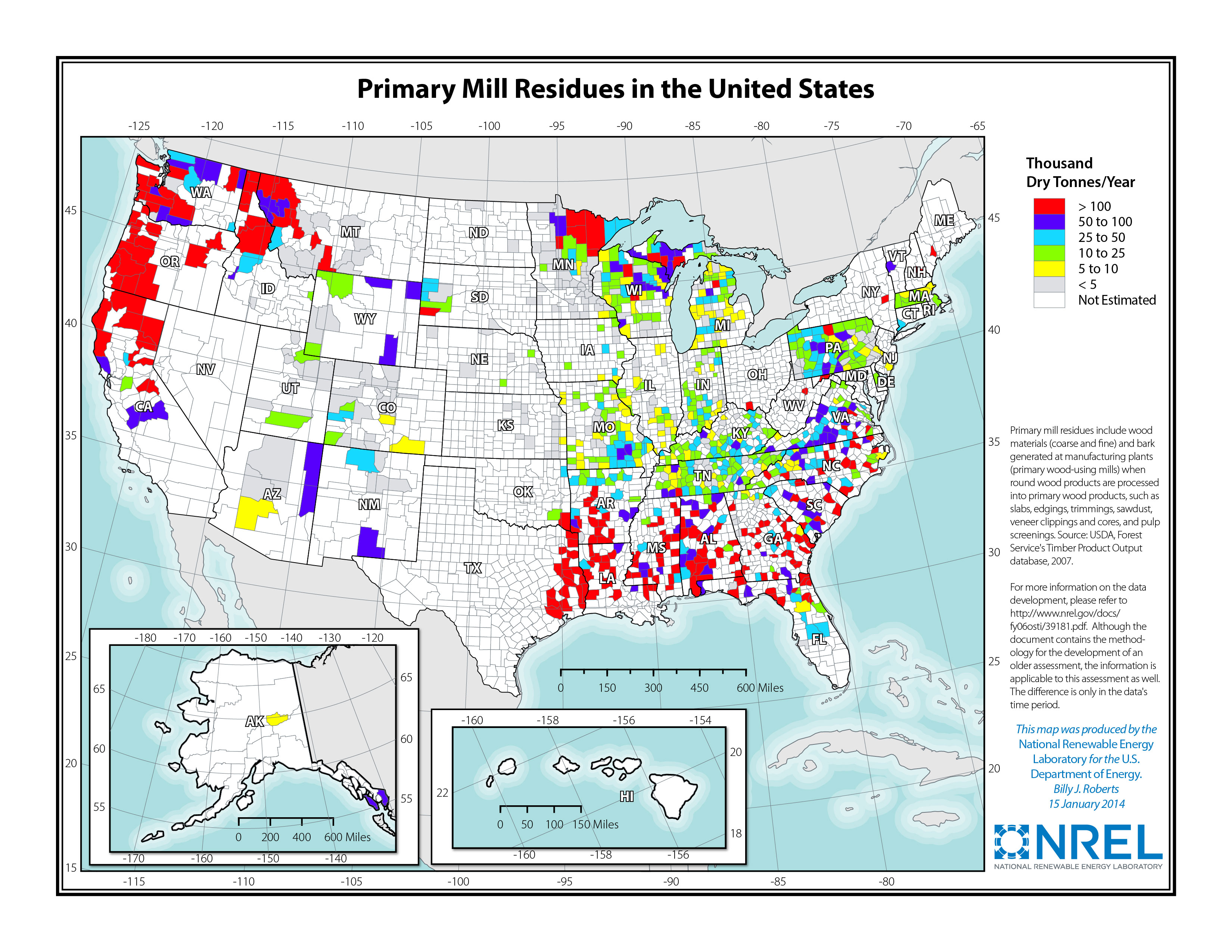
Primary mill residues
Primary mill residues include wood materials (coarse and fine) and bark generated at manufacturing plants (primary wood-using mills) when round wood products are processed into primary wood products, like slabs, edgings, trimmings, sawdust, veneer clippings and cores, and pulp screenings. Source: USDA, Forest Service's Timber Product Output database, 2002.
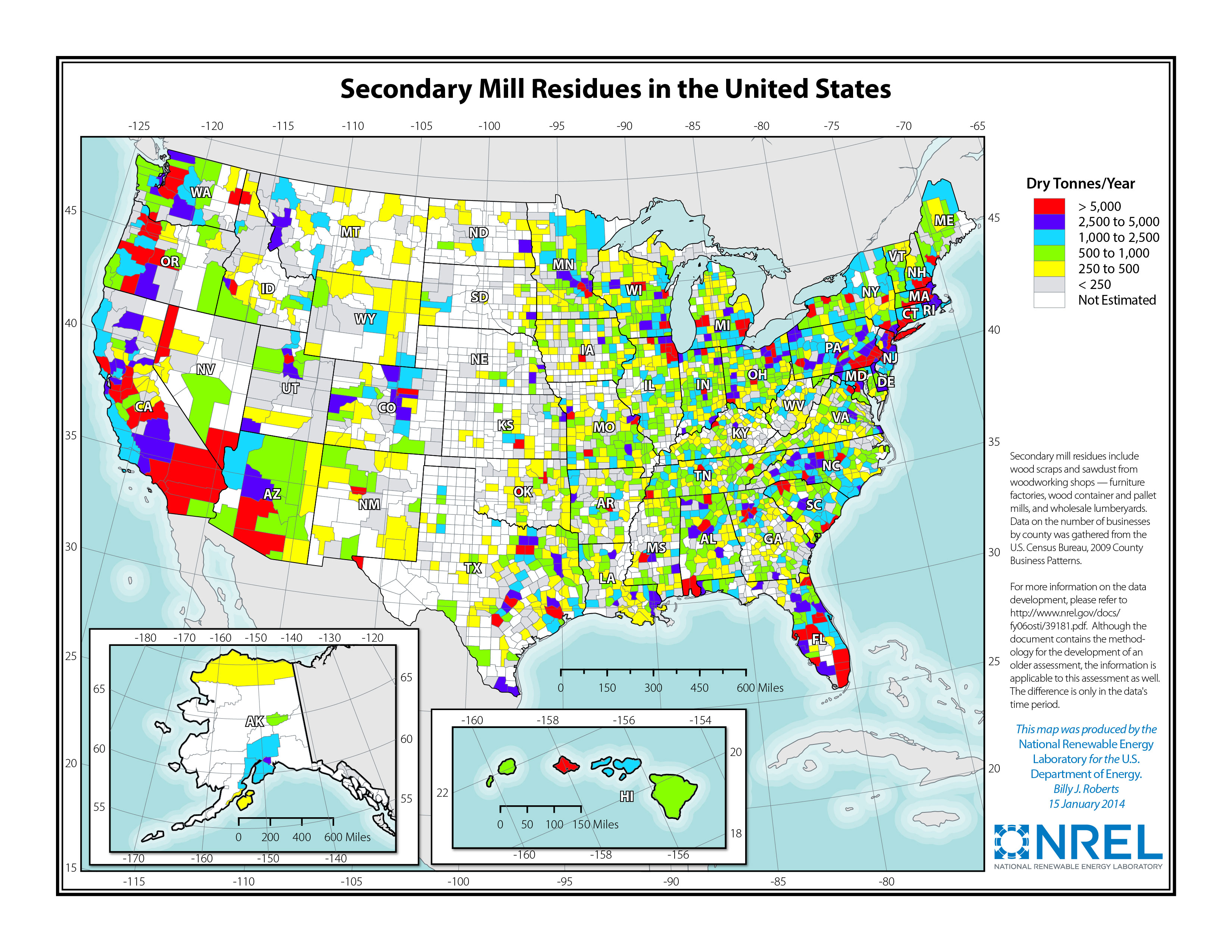
Secondary mill residues
Secondary mill residues include wood scraps and sawdust from woodworking shops — furniture factories, wood container and pallet mills, and wholesale lumberyards. Data on the number of businesses by county was gathered from the U.S. Census Bureau, 2002 County Business Patterns.
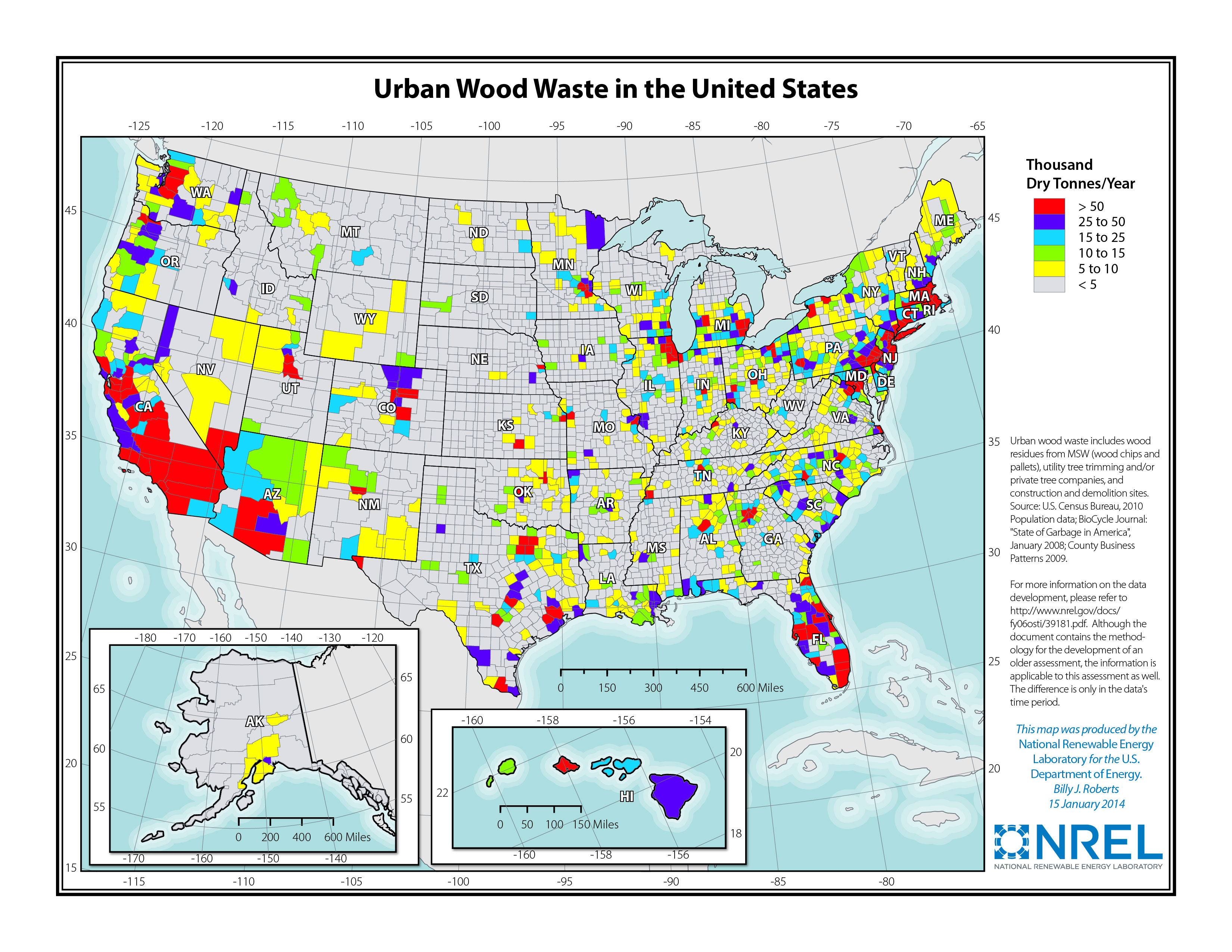
Urban wood waste
This analysis includes wood residues from MSW (wood chips and pallets), utility tree trimming and/or private tree companies, and construction and demolition sites. Source: U.S. Census Bureau, 2000 Population data, BioCycle Journal, State of Garbage in America, January 2004; County Business Patterns 2002.
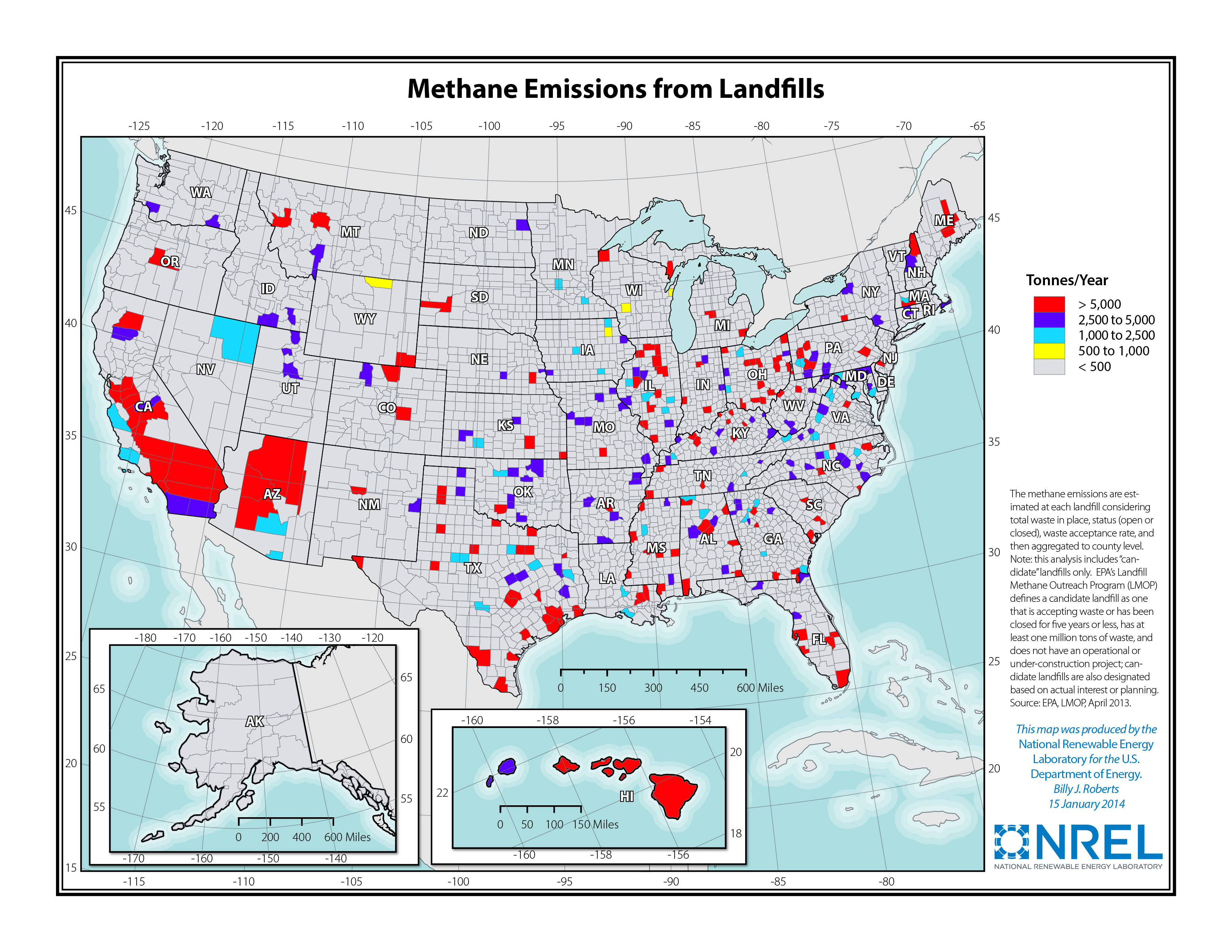
Methane emissions from landfills
The methane generation depends on three key factors: total waste in place, landfill size, and location (arid or non-arid climate). Source: EPA, Landfill Methane Outreach Program (LMOP), 2003.
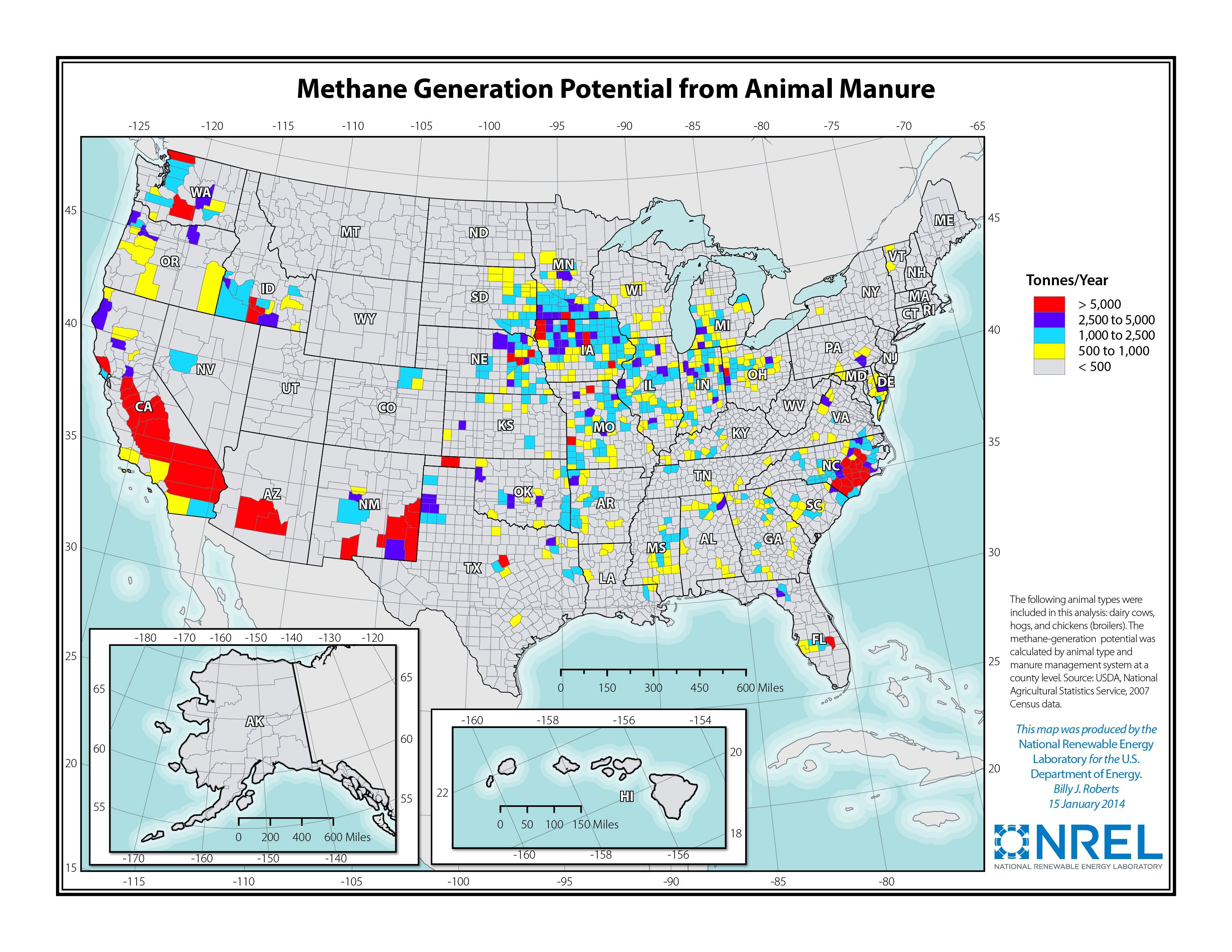
Methane emissions from manure management
The following animal types were included in this analysis: diary cows, beef cows, hogs and pigs, sheep, chickens and layers, broilers, and turkey. The methane emissions were calculated by animal type and manure management system. Source: USDA, National Agricultural Statistics Service, 2002 data.
Methane emissions from wastewater treatment plants (WWTPs)
The methane generation is estimated using the methodology from the EPA Inventory of U.S. Greenhouse Gas Emissions and Sinks: 1990-2003. Source: U.S. Census Bureau, 2000 Population data
Dedicated energy crops
Hybrid poplar, willow, and switchgrass on Conservation Reserve Program (CRP) lands. Source: USDA, Farm Service Agency; the Oak Ridge National Laboratory, 1996 energy crops data.
References
Milbrandt, Anelia, 2005: "A Geographic Perspective on the Current Biomass Resource Availability in the United States", National Renewable Energy Laboratory, Golden, CO. (PDF 2.4 MB) Download Adobe Reader.